
Find Your Ford's Original Factory Window Sticker
Not sure what your Ford really is? Pull the Ford window sticker by VIN and see the original factory build, including trim, equipment, packages, and other key specs. Handy for buyers and sellers.
What is a Ford Window Sticker?
A Ford window sticker is like the car’s factory receipt. It shows how the Ford was built when it was new, including the model and trim, the VIN, what came as standard, what was added as options, and the original price context (MSRP).
For European buyers and sellers, it’s a straightforward way to check what the car should have from day one. If the original sticker isn’t with the car anymore, Vehicle History Europe lets you retrieve a Ford Window Sticker by VIN as a downloadable digital copy you can keep or share during a sale.
What's on a Ford Window Sticker?
A Ford listing can be messy. A Ford window sticker puts the factory details in one place, so you can see what the Ford was built with from the start, including the identity info, equipment, options, key specs, and MSRP. Here’s what you’ll find once you pull a Ford window sticker by VIN.
Vehicle Description
This is the plain-language identity of the car. Model year, Ford model name, derivative/series, plus the key basics that stop mix-ups. Ford uses different naming across markets, so this keeps you on the right version.
Vehicle year, make, and model
Shows the official year and model family, so you’re not comparing a Focus to a Focus that’s actually a different generation.
Trim level and body style
This is where trims like the Trend, Titanium, ST-Line, or Vignale, and body types (e.g., hatch, estate, SUV, van) show up. Knowing this helps you spot “trim upgrades” that are basically just badges.
Vehicle Identification Number (VIN)
The VIN (or chassis number) is tied to the label, so you can cross-check it against the windscreen, door jamb, and documents.
Standard Equipment
This section lists what Ford intended to come standard for that trim level. It’s not the fancy extras; it’s the baseline. This helps you compare trims quickly without opening ten tabs and losing your mind.
Core comfort and convenience features
This is the everyday stuff that shapes how the Ford feels: comfort features, convenience tech, and practical equipment listed for that build.
Safety basics
On the window sticker, this part highlights safety and driver support items that should be present for that build. It lets you check what should be on the vehicle before you travel to see it.
Optional Equipment
This is the part that separates “basic spec” from “nice spec.” Factory-fitted options and upgrades tied to the VIN. This helps you avoid paying extra for options the car never had.
Factory option packages
A single package can change the whole driving experience (e.g., lights, safety tech, heated bits, etc). The window sticker shows what bundle was fitted.
Individual add-on options
Single options added to the build, like upgraded seats, wheels, lighting, infotainment, or driver assist items (depending on the vehicle record). If you’re comparing two similar cars, this is the cleanest way to see what’s genuinely different.
Trim-level additions
Some trims include extras that don’t show on lower trims, even if the seller calls them “options.” This section helps separate trim content from paid upgrades.
Manufacturer Suggested Retail Price (MSRP)
This section gives you the original pricing context shown on the sticker. It’s not today’s used price. It’s the factory starting point. Giving you a reality anchor for what was “base” and what was paid as extras.
Base vehicle MSRP
This was the manufacturer’s suggested base price from the sticker. Useful for comparing trims and understanding where the car originally sat in the range.
Factory options and packages cost
Two cars can look identical in photos. This breakdown shows what was added at the factory and helps explain why one was genuinely a higher-spec build.
Mechanical and Engine Information
The engine line is linked to the VIN, with build identifiers like aspiration, layout, displacement, and other factory details shown on the window sticker. This helps when you’re comparing running costs, insurance group expectations, or just trying to confirm what’s under the bonnet.
Engine specifications
Shows the engine identifiers listed for that Ford, such as displacement, cylinder layout, turbo/aspiration, and other details when listed. For example, the seller says “1.0 EcoBoost,” but the paperwork tells a slightly different story. This section helps you verify it.
Transmission
Shows whether the Ford was built with a manual or automatic gearbox, and often includes the exact transmission type listed for that VIN.
Drivetrain layout
Confirms how power is delivered (FWD/RWD/AWD). This is important information, because it can affect the winter usability, tyre setup expectations, and long-term driving feels
Factory Power and Performance
This performance block shows the key numbers in a simple format so you can compare trims properly. Even if you’re not racing anyone, it helps you avoid buying a “sporty badge” that doesn’t match the actual output.
Power output (hp / kW)
The window sticker listed the factory-rated power figures. This is great for comparing similar Ford trims and avoiding confusion between close variants
Torque and performance figures
Shows torque and related performance lines from the sticker. The torque often explains why one Ford feels punchy, and another feels flat, even with similar horsepower numbers.
Acceleration and top speed
This section makes comparisons easier when you’re looking at two similar Fords, helping you see which one has the stronger performance on paper.
Emissions Block
For European buyers, emissions details matter for running costs and where you can drive under local rules. Keeping these figures in the same label also makes cross-border paperwork feel a lot more manageable.
Euro emissions standard
Shows the Euro standard when listed. Helps you understand the vehicle’s compliance category at a glance.
CO₂ emissions (g/km)
Lists the CO₂ figure shown on the sticker, which can affect comparisons between similar cars and sometimes influences tax/fee calculations depending on the country.
Practical cross-border checks
If you’re importing a Ford into another country in Europe, the emissions info in one place helps you compare the seller’s claims with what your registration office requires, without having to sift through multiple documents.
Basic Equipment
This shows the core items you’d normally expect on that Ford trim level, helping you understand the baseline before options. Perfect when you’re scanning multiple listings and want quick clarity.
Everyday essentials
The regular daily-driver features most people rely on. It matters because it makes inspections faster and helps you confirm what should be there before you even show up.
Key safety essentials
The window sticker highlights safety-related essentials when listed. If a safety kit is important to you, this helps you check the right boxes without guessing.
Why Do You Need a Ford Window Sticker Lookup?
If you’re dealing with a Ford in Europe, a window sticker lookup saves you from guesswork. It helps confirm the exact model, trim, engine, and factory build details tied to that VIN. Handy for everyday buyers, busy dealers, and serious Ford fans who care about originality, provenance, and the “real spec” behind the badge.
Buyers
Buying used? This is how you avoid expensive surprises. A Ford window sticker lookup helps you confirm what the car really is, what it was built with, and whether the description in the listing matches the paperwork. It’s especially useful when you’re comparing similar Fords across Germany, Poland, the Netherlands, France, or Romania.
Confirm the exact Ford trim and body style
Badges can be swapped. The window sticker helps to confirm whether it’s truly Titanium, ST-Line, Vignale, Active, or something else.
Confirm emissions category for planning
Helps you understand the Euro standard and CO₂ context. Useful for registration planning.
Validate import paperwork details
Great when the car came from another country, and the listing info doesn’t perfectly match local documents.
How to Get Your Ford Window Sticker in 3 Simple Steps
Obtaining your Ford Window Sticker is quick and secure. Here’s how:
Enter Ford Details
Enter the Ford details on the Form. You can use the VIN on the vehicle or paperwork.
Submit the VIN
Click the button, let the system match the data, and wait a few seconds.
Download Sticker
Get your Ford window sticker PDF label with the full build and pricing breakdown.
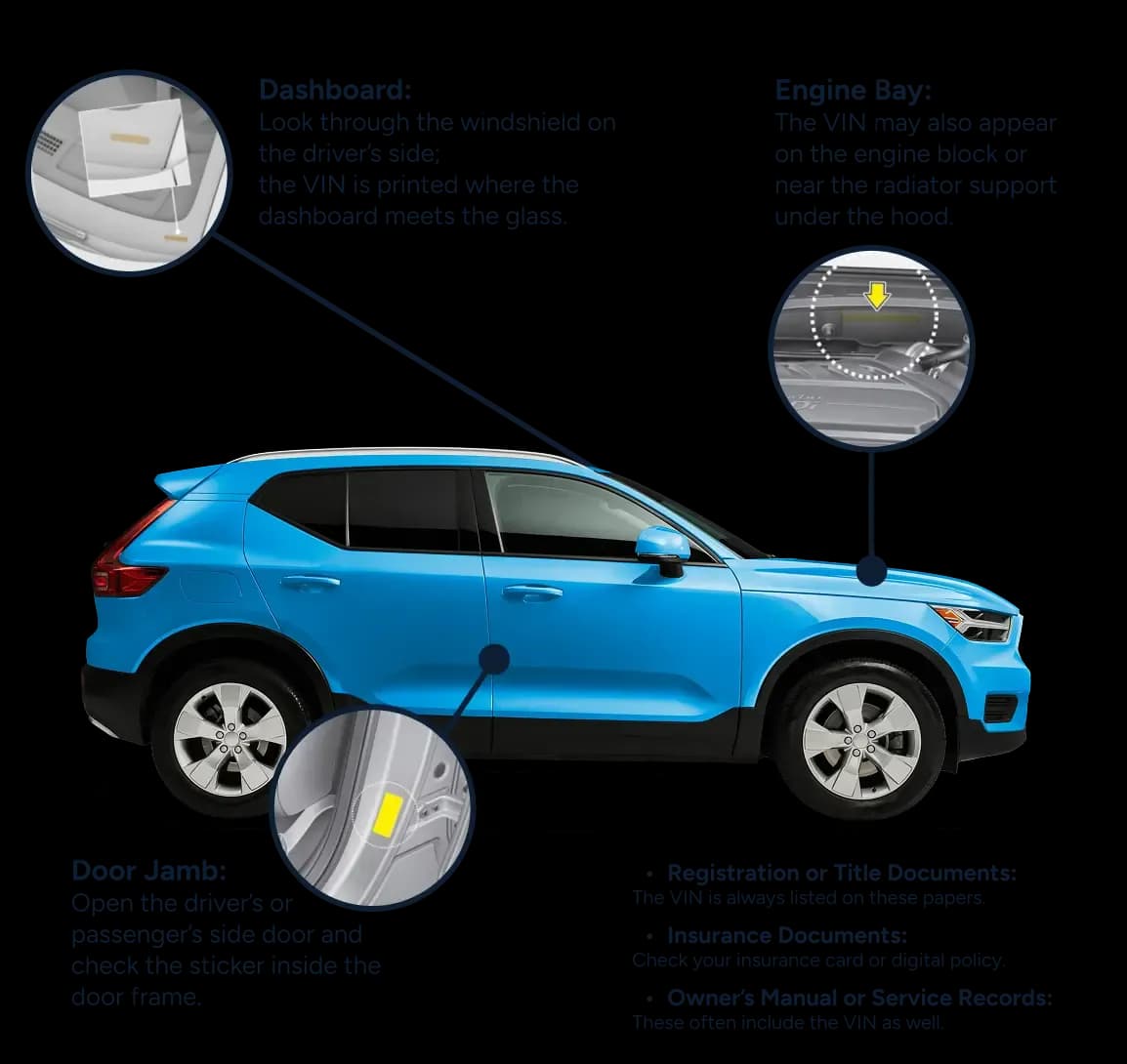
Where to Find the VIN on a Ford
Most modern Fords use a 17-character VIN (the global VIN structure is defined in ISO standards, and the 17-character format became widely adopted decades ago). You can find the VIN in several places below:
Windscreen (dashboard, driver side)
Look through the lower corner of the windscreen. This is common across Europe and the US.
Driver-side door area
Open the driver door and check the door jamb/B-pillar area. Often it’s a sticker or plate.
Engine bay or body stamping (common on some EU builds)
Some Fords (and especially older European vehicles) may have a stamped VIN/chassis number in the engine bay area or on the body.
Documents
If you’re in Germany, Poland, the Netherlands, France, Romania, or any other region. Your registration paperwork typically lists the VIN/chassis number in the insurance documents or service documents.
Why Should You Use Our Ford Window Sticker Tool?
Ford trims in Europe can get confusing fast. Having the same model name can have totally different packs, engines, and “standard” equipment depending on the year and market. Our Ford window sticker lookup by VIN puts the original factory build in front of you, so you’re not relying on badges, memory, or a seller’s guess.
Quick Look at Factory Options
See the exact Ford packages and add-ons tied to the VIN, so you can tell what was standard and what was optional from day one.
Accurate VIN-Based Details
The window sticker is built from VIN-linked vehicle data, so you’re not working off assumptions or generic trim lists.
Helps with classic and older vehicles
Many tools only accept 17 characters. We also support many classic Ford chassis/VIN formats (often 5–14 characters), so you’re not blocked immediately.
24/7 Customer Support
If something on the sticker looks confusing (trim wording, packages, emissions figures), our support can help you make sense of it before you buy or sell.
Get Your Ford's Window Sticker Now!
Badges can get swapped, and listings can get sloppy. Check the original Ford build tied to the VIN and see what’s standard, what’s optional, and what the Ford should have
Check Any Window Sticker for All Manufacturers
Checking other brands? We provide window stickers for many makes, including popular European brands and even classic vehicles.
Common Ford Window Sticker Questions Answered
Is a Ford window sticker the same as a Ford build sheet?
They’re related, but not the same thing. A build sheet is more of a factory production record. A Ford window sticker is made to be easy for buyers and sellers: it summarises the original build, including options, equipment, pricing-style summary, and other key specs.
What does ‘Monroney’ mean on a sticker?
A “Monroney” sticker is the official new-car window label used in the U.S. It’s basically a standard format that lists the car’s MSRP and pricing breakdown, the VIN and build details, plus key info like equipment, fuel economy, and safety notes. On Vehicle History Europe, you can pull the same kind of factory spec and equipment summary for your Ford using the VIN, in a clean, digital sticker-style.
Can I get a window sticker for my used Ford Focus or Fiesta?
Yes, you can use the window sticker lookup tool by Vehicle History Europe to get the Ford Focus and Fiesta model sticker. If it’s an older car or a special market variant, results can vary, depending on the data reported by various sources.
How accurate is the information on a retrieved Ford sticker?
It’s highly accurate because our Ford window sticker is built from VIN-linked records and trusted vehicle databases, so the specs, equipment, and build details are based on documented data, not guesswork.
Why does my Ford VIN not return a window sticker?
The common reasons the Ford VIN does not return a window sticker are: A typo in the VIN, The Ford is older, and records are limited, Very new models sometimes have a short delay before data appears, Fleet, commercial, or special builds may not match a standard sticker format
Does this work for all Fords, including imports?
It works for many Fords, including imports, but the results can depend on where the vehicle was originally sold and the completeness of the underlying records.
Can I use my UK/EU registration plate instead of the VIN?
Sometimes, yes. Plate lookup can work in certain cases, but the VIN is still the most reliable because it’s the universal identifier across countries. If you have the VIN, use that first.
Is it possible to get a Ford window sticker for free from a dealer?
Occasionally, yes. Especially if the car is newer and the dealer has access to the original sale files. But it’s not guaranteed, and many dealers won’t do it for older cars or cars they didn’t sell. That’s why our Window Stickers lookup tools exist in the first place.
Are Window Stickers available for used Ford vehicles?
Yes. Used Ford vehicles can still have their original window sticker details retrieved, even if the paper sticker is long gone. If you don’t have the sticker anymore (or you’re buying a used Ford), you can pull a digital copy using our Ford window sticker lookup by VIN tool. In some cases, a Ford dealer may also help, but it’s not always guaranteed for older cars.
Can I use a Window Sticker when selling or insuring my Ford?
Yes. As a seller, you can use it to prove trim and options and reduce buyer arguments. For insurance, it can help support the vehicle’s original configuration (especially higher trims or option-heavy builds), though insurers may still rely on their own valuation methods.