
Find BMW Factory Build Details from the Original Window Sticker
Before you make a decision on a used BMW, see how the vehicle originally came from the factory with the BMW window sticker by VIN lookup tool. Enter the VIN to view the MSRP, trim, features, and other key details. So you can make a clearer decision when buying or selling.
What is a BMW Window Sticker?
A BMW Window Sticker by VIN is a clean, factory-style overview of the BMW’s specification, built from the vehicle’s identification details. This production label shows “as-built” spec at the time it was first supplied: model and trim, standard equipment, factory options, key mechanical details, and the emissions information buyers often ask about in Europe.
It’s not a random decal or car sticker design for the windscreen. It’s a practical document for checking what’s original, what’s been added later, and what a seller might have missed. With Vehicle History Europe, you can generate a BMW Window Sticker by VIN for modern BMWs and many classic models that you can save and share.
What's on a BMW Window Sticker?
A BMW window sticker presents important information in a clear and organized manner, making it easy for buyers to compare vehicles. In Europe, buyers focus on CO₂ emissions and fuel economy due to tax implications and regulatory standards, making this information crucial for making informed purchasing decisions.
Vehicle Description
This is the quick identity block. It’s the part you show someone first when they ask, “Which BMW is it, exactly?” It summarises the core build details in a way that is easy to match to listings, registration papers, and what’s sitting on your driveway.
Vehicle year, make, and model
The year, BMW model line, and the specific variant are listed here. It sounds basic, but it prevents common mix-ups, especially with similar badges across generations. Helpful for buyers comparing two cars that “look the same” but are not the same.
Trim level and body style
This section clarifies the trim and the body type (e.g., saloon, touring, coupé). On BMWs, trim wording can change by market and year, so having it presented plainly makes the rest of the sticker easier to interpret.
Vehicle Identification Number (VIN)
The VIN is the anchor for the whole sticker. It’s the identifier used across Europe to connect the vehicle to its recorded spec and administrative documents. If you are moving a car between Member States, consistent identification is not optional; it’s the basis of the paperwork trail.
Standard Equipment
This part shows what the BMW typically left the factory with, before any paid extras. It helps you spot what should be there, and what might be missing. It can also be good for maintenance planning because it hints at what systems the car was built to support.
Core comfort and convenience features
This covers the everyday items people actually notice: interior comfort, key cabin functions, and the “normal use” equipment that shapes how the BMW feels on a daily run. It’s also handy when comparing a base build with a higher trim that looks similar in photos.
Safety basics
Here you’ll see the baseline safety equipment expected for that build. When you’re buying a used BMW, this is a quiet reality check, because it helps you understand what the car was designed with originally, before any later retrofits or aftermarket additions.
Optional Equipment
This section lists the paid options and packages that made the original order unique. If you’ve ever seen a seller claim “every option” on a BMW, this is where that statement either holds up or falls apart.
Factory option packages
BMW option packages bundle several features together. This sub-section summarises those bundles so you can see what the factory grouped as a package, not what someone added later as a “nice extra”.
Individual add-on options
These are the single options chosen à la carte. Great for verifying the details that affect value, such as upgraded audio, special lighting, driver-assistance features, or interior upgrades that a listing might describe vaguely.
Trim-level additions
Sometimes the trim itself carries additions beyond “standard”. This part notes those trim-linked extras so you can tell whether you’re looking at a genuine trim build or a badge-and-wheels situation.
Manufacturer Suggested Retail Price (MSRP)
This section shows the recommended retail price presented as a structured reference point for how the car was positioned when new. It’s not meant to predict today’s used value. Instead, it helps owners and buyers see what was “base” and what was paid extra at the time.
Base vehicle MSRP
This is the starting price for the BMW in that configuration, before options. It gives a clean baseline when you are comparing two similar cars where one has far more equipment than the other.
Factory options and packages cost
This summarises the cost impact of options and packages as listed on the sticker. It’s useful when you are trying to understand why one example commands a premium.
Mechanical and Engine Information
This block is for the practical questions. What engine is it, what transmission is it paired with, and how is power delivered? For cross-border buyers, it can also help when you are trying to match a vehicle to the right category for servicing and parts.
Engine specifications
Engine displacement and key identifiers sit here, presented clearly enough for non-specialists. It helps you avoid the common “same badge, different engine” surprise that pops up in multi-market European listings.
Transmission
The label also shows the details about the automatic or manual transmission type. It’s a small line with big consequences for value, driving feel, and sometimes even insurance quotes.
Drivetrain layout
The stickers list whether the BMWs have front, rear, or all-wheel drive. With BMW, drivetrain details can be central to the buying decision, especially if you are choosing between a daily commuter setup and a more enthusiast-focused layout.
Factory Power and Performance
This part translates the mechanical spec into numbers people recognise when comparing BMWs. It’s not “bragging rights”. It’s a quick way to confirm you are looking at the correct output for that build.
Power output (hp / kW)
Power is shown in common units, so it’s easy to compare across adverts and countries. It helps when a listing only shows one unit, or when two similar cars have different outputs due to engine variants.
Torque and performance figures
Torque and related performance notes are listed to support real-world comparisons, like motorway driving and overtakes. It also helps explain why two BMWs with similar horsepower can feel different on the road.
Acceleration and top speed
The sticker also listed the acceleration and top speed when the BMW came from the manufacturer. Buyers use it as a sense-check, not as a promise. If a claimed figure looks off, it can signal a mismatched model or incorrect listing.
Emissions Block
This section matters if you’re European or want to buy or sell the BMW in the Europe market. It is often tied to costs and access: taxation bands, registration fees, and restrictions in certain urban areas. The label keeps these details in one place for quick checks.
Euro emissions standard
This states the Euro emissions standard associated with the build, where available. In day-to-day terms, it helps owners understand how the car may be treated under local rules and city access policies.
CO₂ emissions (g/km)
CO₂ figures are included because consumer information on fuel economy and CO₂ for new passenger cars has long been treated as something buyers should be able to compare. It’s also one of the first numbers people ask for when importing or registering in another EU country.
Practical cross-border checks
This is the “use it in real life” sub-section: the parts people check when moving between countries or buying from abroad. For example, if you’re purchasing in Ireland and registering elsewhere, or importing into Ireland, having emissions and identity details clearly listed saves back-and-forth.
Basic Equipment
This section highlights the “daily essentials” for quick reading. Not everyone wants to sift through a lengthy equipment list, especially when comparing multiple BMWs.
Everyday essentials
This covers the practical items that shape daily use. It’s also where you sanity-check claims like “fully loaded” or “high spec” against what is actually present.
Key safety essentials
A straightforward list of safety essentials, presented for quick comparison. It’s handy when you are checking two similar cars and want to see whether one has meaningful safety differences.
Why Do You Need a BMW Window Sticker Lookup?
A BMW window sticker by VIN provides a precise and detailed overview of your car’s original specifications. Whether you’re buying, selling, or organizing your records, this easy-to-read VIN-based sticker ensures you know exactly how your BMW was configured at the factory, including key specifications, options, and emissions data.
Buyers
Buying a used BMW can feel simple until you notice the small gaps, like unclear options, missing spec details, and “it should have” claims. A BMW window sticker lookup lets you compare the car in front of you to what it was meant to be, from the factory, without making it a big drama.
Confirm the exact BMW model and trim before you commit money
This helps you avoid the common issues where cars with similar badges have very different engines, trims, or options, helping you verify exactly what the car offers before committing.
Avoid buying a “badge upgrade” that is not a true trim level
A badge can be swapped. However, a detailed specifications trail is harder to fake. The window sticker makes the claimed trim easier to sanity-check.
Make insurance conversations easier by knowing the real spec
Insurers may ask about trim and equipment. Having a clear spec summary reduces back-and-forth and helps you describe the car accurately.
How to Get Your BMW Window Sticker in 3 Simple Steps
You do not need to be a technical person for this. Follow these simple steps to generate a window sticker for the BMW and review the details at your own pace.
Enter your BMW details
Type or copy the BMW VIN on the Form above. Ensure that you type it correctly.
Submit the VIN
Submit the VIN, and review the preview.
Download and review the sticker
Continue to purchase the window sticker. Download the sticker and check the detailed trim, options, engine, and emissions of the BMW.
Where to Find the VIN on a BMW
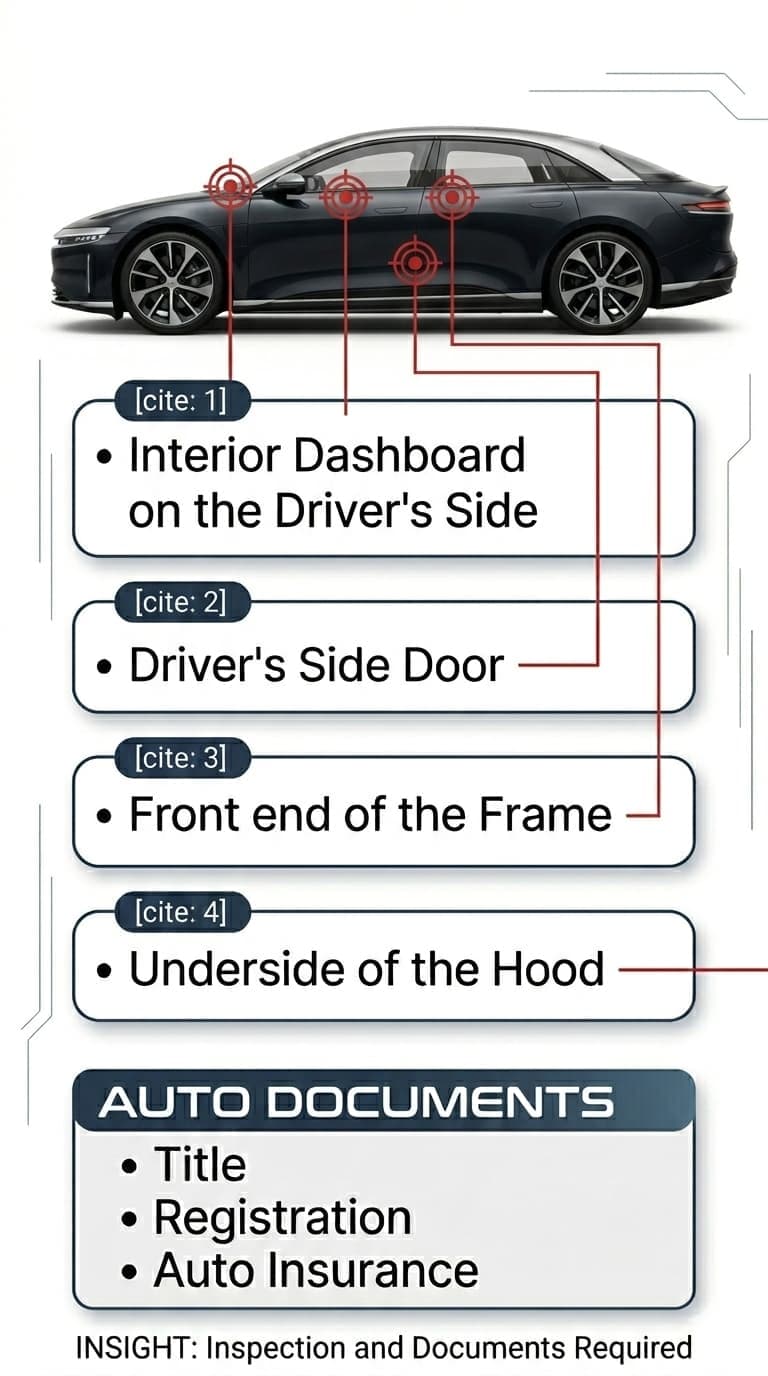
The VIN is usually easy to find once you know where to look. On many BMWs, it appears in a few common locations on the vehicle and also on official documents.
Dashboard (visible through the windscreen)
On many BMWs, you can see the VIN through the lower corner of the windscreen when looking from outside the car. It’s a quick check and often the first place people look.
Driver’s door jamb label
Open the driver’s door and look for a label or plate on the door jamb area. This location is common and practical, especially when checking the VIN during a viewing.
Under the bonnet of the body structure
Some BMWs have VIN markings or plates under the bonnet area. This is helpful when confirming details during deeper checks or inspections.
Vehicle registration documents
Your registration documents normally display the VIN. Across the EU, registration documents are used for identification and re-registration, so VIN accuracy matters.
Insurance documents and policy details
Many insurers list the VIN on your paperwork or digital policy documents. It can be a handy option if you do not want to go outside to check the car.
Boot area labels (varies by model)
On certain models, you may find identification labels in the boot area.
Why Should You Use Our BMW Window Sticker Tool?
A BMW window sticker should feel clear, not confusing. Vehicle History Europe focuses on readable results, EU-relevant details, and support from real people. If you’re buying, selling, or organising records for a BMW, this is a straightforward way to get the facts in one place.
Most comprehensive database coverage
We aim for wide coverage across BMW models and years, including many older vintage vehicles where documentation is harder to find.
Live Chat with VIN Expert
When you need a human answer, you get a human answer from an expert. It matters when you’re dealing with documents and important purchases.
Built Exclusive For European Market
The layout and wording are designed for EU users, including cross-border checks and emissions information expectations.
High accuracy, cross-checked results
We structure the output carefully and cross-check key fields, so the sticker is useful for real decisions, not just curiosity.
Get Your BMW's Window Sticker Now!
Ready to check the BMW? Enter the VIN and generate your factory-style window sticker now.
Check Any Window Sticker for All Manufacturers
Some households have more than one badge on the driveway. Our window sticker lookup tools are built to work across manufacturers, including many older classic vehicles, where specs are harder to confirm.
Common BMW Window Sticker Questions Answered
How to get a Monroney sticker?
You can get a Monroney sticker (vehicle window sticker) with the VIN and a window sticker lookup tool like Vehicle History Europe for a clear, practical equivalent.
Can I get a window sticker from VIN online?
Yes, you can easily get a BMW window sticker online by entering your VIN into our lookup tool. It will generate an original factory-style window sticker for your vehicle, showing key specifications and options.
How do I check my BMW spec?
To check your BMW spec, you can use the vehicle’s VIN. Simply enter it into our tool, and you’ll get a detailed factory window sticker, outlining the model, trim, features, and much more.
Can I get a build sheet from a VIN number?
Yes, you can get a build sheet from the VIN. The build sheet provides detailed information about the vehicle’s original configuration, customized for the specific BMW associated with the VIN. This includes any optional features and packages that were included at the time of manufacture.
How do I find VIN stickers?
VIN stickers are typically located on your car’s dashboard, near the windshield, or on the driver’s side door frame. These stickers contain your car’s unique identification number (VIN), which is essential for retrieving a window sticker or build sheet.
How do I get the original window sticker for a car?
The easiest way to obtain the original window sticker for a BMW is by entering the vehicle’s VIN into our tool. It will generate the factory window sticker, which includes the vehicle’s original equipment, features, and MSRP.