
Check Vehicle's Past Records by VIN in Serbia
In 2024, around 65,275 used vehicles were imported to Serbia from neighbouring European countries. Before you purchase a used vehicle, use the Serbia VIN Check service and get the vehicle report to see its history, like accidents, auctions, and odometer readings.
Why Checking a VIN in Serbia is Crucial
10 to 12 Years Old
The average age of imported used cars is around 10–12 years old.
130000+
Used cars with hidden history are imported into Serbia yearly.
79%
In Serbia, 79% of vehicles on the road are used, while only 21% are new.
What is a VIN Number?
The Vehicle Identification Number or VIN is a 17-digit code assigned to every vehicle to identify each of them. It shows who made the vehicle, where it was built, and its serial number. No two cars share the same VIN even though they come from the same manufacturer and have the same model and trim.
In Serbia, checking the VIN is important because many used cars are imported from other countries in Europe. Used car buyers can run a VIN check to confirm a vehicle’s origin and trace its history. This reveals the previous owners and whether the car was ever damaged, stolen, or written off abroad.
Where to Find the VIN on a Car?
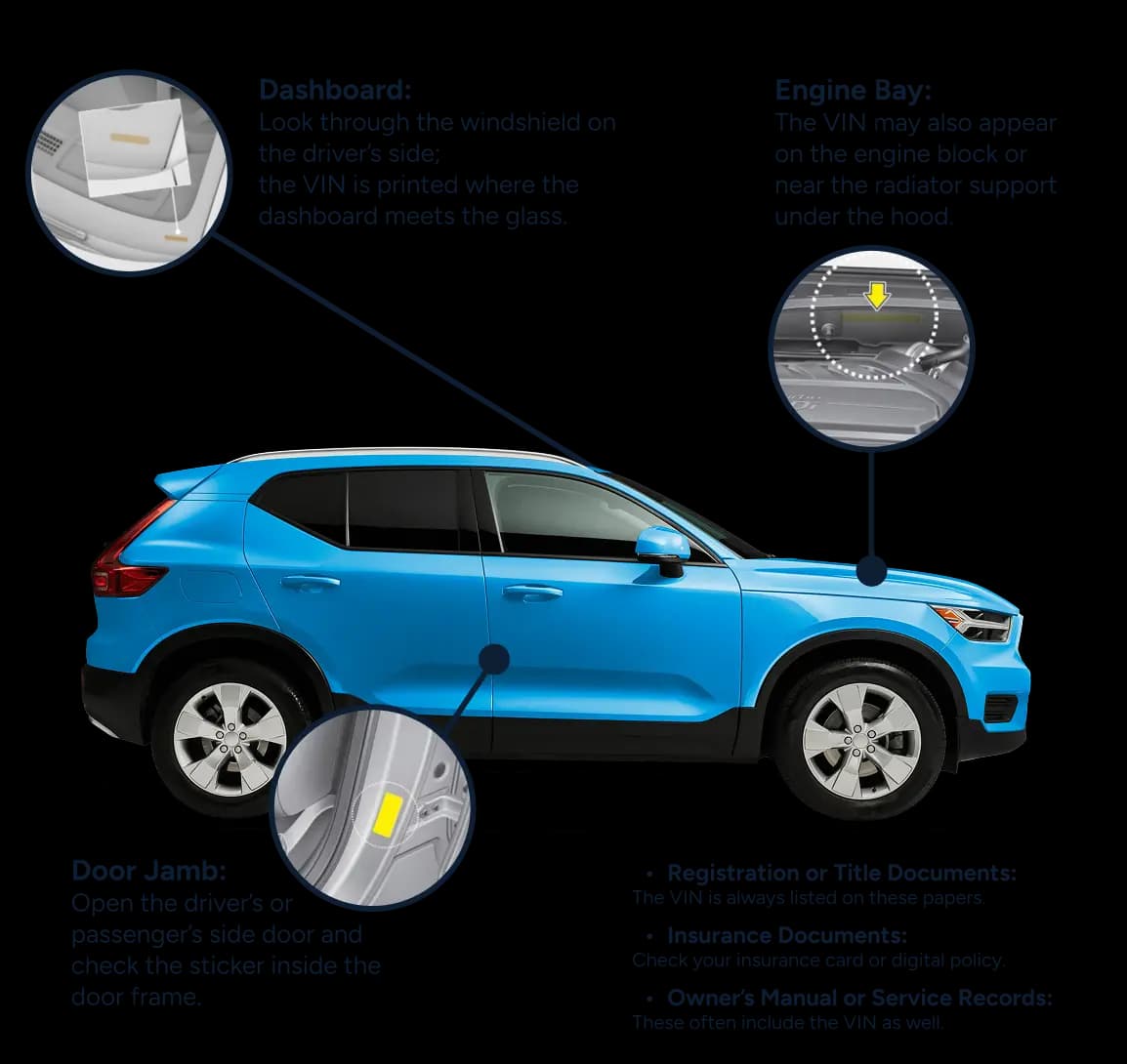
To find the VIN on a vehicle, you can examine the body, like the driver’s side doorjamb and the vehicle’s paperwork. Examine these locations to find the VIN:
Dashboard
Check the lower corner of the driver’s side dashboard where it meets the windshield. You can usually see the VIN on a metal plate or sticker from outside the car.
Door Jamb
Open the driver’s door and look at the sticker on the door frame where the door locks. The VIN is often printed there along with other vehicle details.
Under the Hood
Lift the hood and look at the firewall between the engine and the cabin, or on the engine block. Many vehicles have the VIN stamped or labelled in this area.
Vehicle Documentation
The VIN is also listed on important vehicle documents, such as the registration papers, insurance records, and the title or import paperwork. Always check that the VIN on the car matches these documents
What Information Can You Get From a Serbian VIN Check?
By checking the VIN number in Serbia, you will be able to see the complete information of the vehicle through a vehicle history report. Here’s the information you’ll find on the report
Detailed Vehicle Specification
Check the complete vehicle specifications like the country of origin, MSRP, fuel type, drive type, and many more.
Detailed Build Info
Review technical data like engine displacement and transmission type to confirm the car matches the seller’s description and your performance needs.
See the Prices
Compare the MSRP and the market value of your dream vehicle carefully.
Technical Specifications
Access key measurements and mechanical details that explain how the vehicle performs in real-world driving conditions.
Engine Details
Check engine size, configuration, horsepower output, and fuel efficiency ratings based on manufacturer specifications.
Transmission Type
Confirm whether the vehicle uses an automatic or manual transmission, including the number of gears and drivetrain setup.
Title and Vehicle Condition
Understand the vehicle’s legal standing and overall condition to avoid ownership issues, registration problems, or unexpected risks after purchase.
Title Status
See whether the title is clean or carries branding such as salvage, rebuilt, or other legal restrictions affecting ownership.
Odometer Records
Check the detailed odometer reading along with the date and the last recorded mileage of the vehicle.
Title and Odometer Reading
Understand the vehicle’s legal standing and overall condition to avoid ownership issues, registration problems, or unexpected risks after purchase.
Title Status
See whether the title is clean or carries branding such as salvage, rebuilt, or other legal restrictions affecting ownership.
Odometer Records
Compare recorded mileage from inspections and registrations to spot inconsistencies or potential odometer rollback.
Lien and Loan Information
Identify financial claims tied to the vehicle that could block ownership transfer or create legal complications after purchase.
Outstanding Loans
Check for unpaid auto loans or financing agreements still attached to the vehicle.
Legal Claims
Review other legal holds, judgments, or claims that may prevent a clean transfer of ownership.
Accident and Damage Records
Learn about reported collisions or damage incidents that occurred during the vehicle’s lifetime.
Collision Reports
View insurance claims or police reports filed after accidents involving the vehicle.
Damage Severity
Understand how serious each incident was and whether repairs were done to the vehicle after the accident.
Sales and Ownership History
Track how the vehicle has changed hands over time to identify unusual ownership patterns or frequent resales.
Previous Owners
See how many owners the vehicle has had and when ownership transfers occurred.
Price History
Review past sale prices to evaluate whether the current asking price aligns with the vehicle’s market history.
Auction Records
Check whether the vehicle passed through dealer or wholesale auctions, which often indicates fleet use or trade-in history.
Auction Dates and Locations
See when and where the vehicle was sold at auction and under what circumstances.
Auction Condition Photos
View available images taken during the auction process to assess the vehicle’s condition at that time.
How to Check the VIN Number in Serbia?
To check the car’s history by VIN in Serbia, follow these simple steps:
Step 1: Enter the VIN
Enter the VIN of the vehicle you want to check on the form above.
Step 2: Click "Search VIN"
Then, hit the “Search VIN” button to submit the form. Then wait for a few seconds to get the report generated.
Step 3: Get a Detailed Vehicle History Report
You can examine the preview page and proceed to payment to get the full vehicle history report.
Free vs. Paid VIN Check in Serbia
To run a VIN check in Serbia, you have both free and paid options. Here’s what you will get on the free VIN check in Serbia and the paid check.
Information / Records | Free VIN Check | Paid VIN Check |
|---|---|---|
Year, make & model | ||
Engine type & size | ||
Transmission | ||
Drive type | ||
Fuel type | ||
Doors | ||
Horsepower & torque | ||
Detailed vehicle specs | ||
Technical specs | ||
Auction records | ||
Vehicle sales history | ||
Title and condition | ||
Accident records | ||
Theft records | ||
Lien and loan records |
Why You Need to Check the VIN in Serbia?
Checking the Serbian VIN is important as it helps you get the complete information of the vehicle and to see if it matches your needs and budget. Not only buyers, but sellers are also recommended to check the VIN. Here are the reasons why:
Buyers
As a buyer, getting a vehicle history report before purchasing a used vehicle in Serbia is crucial. Here’s why a buyer should get a vehicle report.
Check Hidden Damage
With a complete vehicle history report, you can examine if the vehicle has any hidden defects that might not be discovered during the manual inspection.
Make Sure the Odometer is Not Rolledback
Odometer rollback is a common crime in the used car market. Get a complete vehicle history report to ensure the car’s odometer is not rolled back.
Sellers
As a seller, owning and presenting a valid vehicle history report helps a lot. Here are the reasons why you need to get a complete vehicle history report.
Close Deal Faster
A complete vehicle history report, it helps you understand the vehicle better and answer buyer questions with no hesitation. This often leads to deal closing.
Set the Right Pricing
You can get the estimated retail value and complete information on a vehicle’s past through a vehicle history report. By combining the car’s retail value and the car’s overall condition, you can set the right price easily.
Why Choose Our Serbia VIN Check tool
Our Serbia VIN check tool makes it easy to get complete vehicle information quickly. Here’s why it stands out from other services:
Complete Vehicle Reports
Access history, including accidents, ownership records, and official title details, all sourced from trusted Serbian databases.
User-Friendly System
Simply enter the VIN on the form above. Our platform is intuitive for anyone, even first-time users.
Reliable Data
We pull information directly from official Serbian records, giving you accurate and trustworthy results.
Fast Results
Get your complete car report in only 30 seconds, so you don’t have to wait minutes to get the car’s information.
Affordable Pricing
Our Serbia VIN check is affordable, offering more information than most other services at a lower cost.
100% Private and Secure
Your searches are completely confidential. We never share your information with third parties.
Tips to Avoid Used Car Scams in Serbia
To avoid scams, always verify the vehicle’s history, meet sellers in person, and conduct a thorough inspection before finalising any deal.
Vehicle History & Mileage:
Always check the VIN to confirm mileage and verify past issues (e.g., accidents, imports, or previous use as a taxi).
Physical Inspection:
Never buy without seeing the car in person and test-driving it. Watch for hidden issues like rust, engine problems, or uneven tire wear.
Documentation Check:
Verify that the seller provides valid documents (e.g., logbook, ID) and that the car's records match the owner’s details.
Safe Transactions:
Meet in public places, avoid upfront deposits, and ensure all paperwork is verified before making any payments.
Dealer vs. Private:
Reputable dealers are safer, but if buying privately, verify the seller’s identity and the car’s history thoroughly.
Red Flags:
Watch out for overly eager sellers, unusually low prices, or refusal to allow a mechanic to inspect the car.
Run VIN Checks in Other Countries
No matter where a car is from, our VIN check works across Europe to help you verify imported vehicles.
FAQ About VIN Check in Serbia
Is a VIN check free in Serbia?
A basic VIN decode that shows vehicle specifications may be free in Serbia, but detailed history reports covering accidents, mileage, and theft usually cost money. International providers like Cebia work in the region, while Serbian platforms offer official or paid checks.
Can I check mileage by VIN in Serbia?
Yes, you can check mileage by VIN in Serbia using international services such as the Vehicle History EU, which uses European databases. You can also visit an authorised dealer to read mileage data stored in the car’s electronic control units to detect possible fraud.
Does VIN show accident history?
Yes, a Vehicle Identification Number can show accident history through a vehicle history report from Vehicle’s Report EU, including reported crashes, damage, ownership, and title issues, but it is not perfect because some accidents are never officially reported.
Can a VIN check show if a car was stolen abroad?
Yes, a VIN check can show if a car was stolen abroad by using our VIN check in Serbia tool. Once you’ve successfully checked the VIN, you will get a vehicle history report that shows you the date and location where the vehicle was stolen.
Can I run a VIN check before importing a car to Serbia?
Yes, you can and should run a VIN check before importing a car to Serbia to confirm its history, detect fraud such as mileage tampering, and make sure it meets Serbian technical rules like Euro 3 for customs and registration, using services such as Vehicle’s Report EU.