
Examine a Vehicle's Mileage Records in Bulgaria With a Vehicle Report
Before you purchase a used vehicle in Bulgaria, it is important to check the vehicle’s background. Run a Bulgaria VIN check and get the vehicle history report. Examine its specs, country of origin, damage history, odometer reading, and more.
Why You Need to Check a VIN in Bulgaria?
250,000
Estimated overall used car registrations are over ~250,000 vehicles per year
15 years old
Over 70 % of vehicles in Bulgaria are more than 15 years old, with only around 4.6 % of cars under five years old as of early 2024.
30 –50 %
A local automotive expert claimed that up to ~30–50 % of used cars entering Bulgaria may have manipulated odometers
What is a VIN Number?
A VIN, or Vehicle Identification Number, is a unique 17-character code made up of letters and numbers. It acts as the vehicle’s fingerprint. The number is assigned at the factory and contains details about the manufacturer, country of production, engine type, body style, and a specific serial number that distinguishes one car from another. No two vehicles share the same VIN, even if they are the same model and year.
In Bulgaria, checking the VIN is particularly important because many used cars are imported from Western Europe, the United Kingdom, and the United States. A Bulgaria VIN check helps buyers verify the vehicle’s origin and uncover important history records, including previous registrations, accident damage, mileage inconsistencies, or theft reports that may not be obvious during a physical inspection.
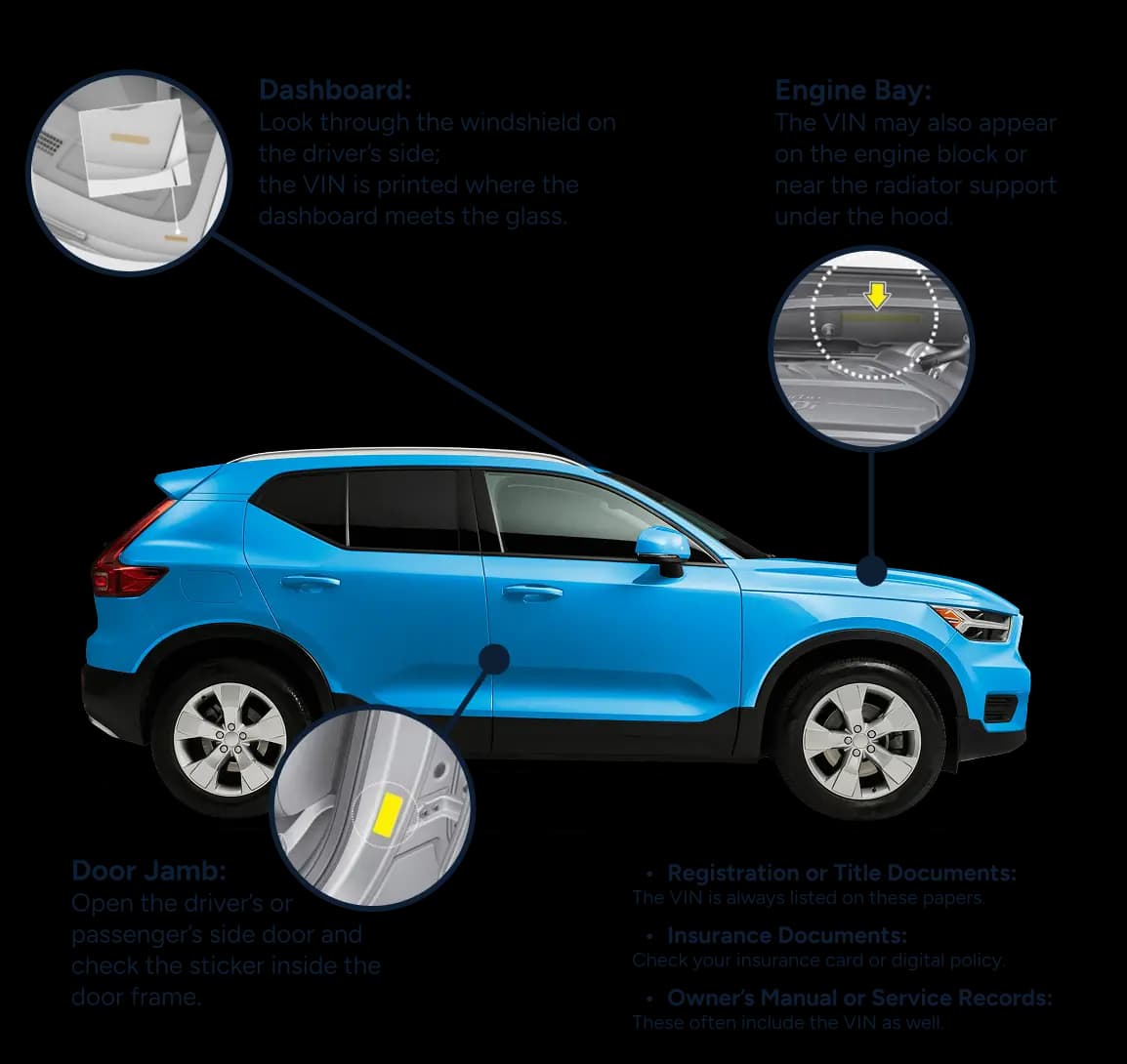
Where to Find the VIN on a Car
The VIN is permanently attached to the vehicle and also recorded in official documentation. Comparing the VIN in multiple places is a smart way to confirm authenticity and avoid potential fraud.
Dashboard
Stand outside the vehicle and look through the front windshield on the driver’s side. In most cars, the VIN is displayed on a small plate positioned at the lower corner of the dashboard. It should be clearly visible from outside the vehicle.
Driver’s Door Area
Open the driver’s door and check the door pillar or the inner frame near the latch. Manufacturers usually place a label or metal plate in this area showing the VIN along with manufacturing details and weight specifications.
Engine Compartment
Lift the bonnet and inspect the firewall between the engine and passenger cabin, or look for markings on the engine block. Many vehicles have the VIN stamped or securely fixed in the engine bay for permanent identification.
Vehicle Documents
The VIN is also printed on official paperwork, including the vehicle registration certificate, insurance documents, ownership contracts, and import records in Bulgaria. Before purchasing a car, always ensure the VIN on the vehicle matches every document exactly, character by character.
What Information Can You Get From a Bulgaria VIN Check?
A Bulgaria VIN check provides detailed records that help to understand a vehicle’s background before deciding to sell or purchase a used and imported vehicle. Since many cars in Bulgaria are imported from across Europe and beyond, reviewing official data can help reduce the risk of legal, financial, or mechanical surprises.
Vehicle Specifications
Check the complete vehicle specifications, including country of origin, original MSRP, fuel type, drivetrain configuration, body style, and other factory details that define the vehicle.
Detailed Build Info
Review technical production data such as engine displacement, trim level, and transmission type to confirm the car matches the seller’s description and your expectations.
See the Prices
Compare the original MSRP with the estimated current market value in Bulgaria to evaluate whether the asking price reflects the vehicle’s age and condition.
Technical Specifications
Access important mechanical details that explain how the vehicle performs under normal driving conditions.
Engine Details
Check engine size, configuration, horsepower output, torque figures, and manufacturer’s fuel efficiency ratings.
Transmission Type
Confirm whether the vehicle is equipped with a manual or automatic transmission, including the number of gears and the drivetrain setup.
Title and Vehicle Condition
Understand the legal status and overall condition of the vehicle to avoid registration issues or ownership disputes in Bulgaria.
Title Status
Verify whether the vehicle has a clean title or carries branding such as salvage, rebuilt, or other legal restrictions.
Odometer Records
Check the latest recorded mileage along with the reporting date to ensure consistency.
Title and Odometer Reading
Review combined title and mileage information to identify potential discrepancies before purchase.
Title Status
Confirm again that the title does not include restrictions that could affect ownership transfer in Bulgaria.
Odometer Records
Compare mileage records from inspections and registrations to detect possible odometer rollback.
Lien and Loan Information
Identify financial obligations that could delay or block a lawful ownership transfer.
Outstanding Loans
Check whether any active auto loans or financing agreements remain attached to the vehicle.
Legal Claims
Review other registered claims, liens, or court judgments that may create complications after purchase.
Accident and Damage Records
Learn about reported accidents or damage events recorded during the vehicle’s lifetime.
Collision Reports
Access insurance claims or official reports filed after accidents involving the vehicle.
Damage Severity
Understand how serious each reported incident was and whether proper repairs were documented.
Sales and Ownership History
Track how the vehicle has changed ownership over time.
Previous Owners
See how many individuals or businesses previously owned the vehicle and when transfers occurred.
Price History
Review past sale prices to determine whether the current listing price aligns with historical market data in Bulgaria.
Auction Records
Check whether the vehicle was previously sold through a dealer or wholesale auctions.
Auction Dates and Locations
Find out when and where the vehicle appeared at auction and the type of sale involved.
Auction Condition Photos
View available auction images to assess the vehicle’s visible condition at the time of sale.
How to Check a VIN Number in Bulgaria?
To check a VIN number and get a reliable vehicle history report, you can use our Bulgaria VIN check service, and here are the simplest steps to get it done.
Step 1: Enter the VIN
Click on the form above, then enter the vehicle’s VIN. If you can’t have it, ask the seller directly.
Step 2: Click "Search VIN"
When it is done, click on the button to submit the form.
Step 3: Get a Detailed Vehicle History Report
Wait for seconds until the report is generated. Then, proceed to payment to get the full vehicle history report in Bulgaria.
Free vs. Paid VIN Check in Bulgaria
The free VIN number check in Bulgaria can help you get the complete basic information of the vehicle. However, if you want to get the complete vehicle’s information, you can use our paid VIN check instead.
Information / Records | Free VIN Check | Paid VIN Check |
|---|---|---|
Year, make & model | ||
Engine type & size | ||
Transmission | ||
Drive type | ||
Fuel type | ||
Doors | ||
Horsepower & torque | ||
Detailed vehicle specs | ||
Technical specs | ||
Auction records | ||
Vehicle sales history | ||
Title and condition | ||
Accident records | ||
Theft records | ||
Lien and loan records |
Why You Should Check the VIN in Bulgaria
Checking a VIN in Bulgaria is a smart step before buying or selling a used vehicle. It gives access to verified background information and helps confirm that the car matches your expectations, budget, and legal requirements.
Buyers
For buyers in Bulgaria, requesting a vehicle history report before completing a purchase can prevent costly mistakes and unexpected issues.
Check for Hidden Damage
A detailed vehicle report can reveal past structural damage, accident repairs, or insurance claims that may not be visible during a basic inspection.
Make Sure the Odometer Is Accurate
Odometer manipulation remains a concern in the used car market. Reviewing recorded mileage history helps detect inconsistencies and protect you from overpaying.
Sellers
For sellers, presenting a verified vehicle history report increases transparency and builds buyer confidence.
Close Deals Faster
When sellers can provide documented vehicle information upfront, buyers feel more confident. Clear records often reduce hesitation and speed up negotiations.
Set a Competitive Price
A vehicle history report provides estimated market value along with background details. This makes it easier to set a realistic and competitive price in Bulgaria.
Why Choose Our Bulgaria VIN Check Tool
Our Bulgaria VIN check tool is designed to provide fast and reliable access to detailed vehicle information.
Complete Vehicle Reports
Access key records such as accident history, ownership data, title status, mileage records, and other important background details from trusted data sources.
Easy-to-Use Platform
Simply enter the VIN into the search form. The system is designed to be simple and accessible, even for first-time users.
Trusted Data Sources
Information is gathered from reliable and verified databases to ensure accuracy and consistency.
Fast Results
Receive your full vehicle report within seconds, allowing you to review essential information without delays.
Competitive Pricing
Our Bulgaria VIN check service offers extensive vehicle data at a reasonable cost compared to many alternatives.
Private and Secure
All VIN searches are confidential. Your information is protected and never shared with third parties.
Tips Before Buying a Used Car in Bulgaria
Buying a used car in Bulgaria requires careful attention to legal procedures, documentation, and the vehicle’s actual condition. We’ve completed four easy tips you can follow before you purchase a used car in Bulgaria.
Professional Inspection
Always have a trusted mechanic inspect the vehicle before agreeing to buy. Check for repainted panels that may indicate past accidents, uneven panel gaps, rust underneath the car, and other signs of hidden structural damage.
Verify Documentation
Make sure the seller provides the Vehicle Registration Certificate Part I and Part II, a valid technical inspection certificate, and proof of paid annual car tax. Confirm that the VIN or frame number matches all official documents exactly.
Legal Procedures
For private sales in Bulgaria, the purchase contract must be signed in front of a Bulgarian Notary Public to be legally valid. Additionally, any payment exceeding BGN 9,999 must be made through a bank transfer.
Mandatory Registration
After completing the purchase, the new owner must register the vehicle at the Traffic Police Office, known as KAT, within one month to avoid penalties or registration complications.
Run VIN Checks in Other Countries
Our VIN check works across Europe to help you verify imported vehicles. Choose which country you are coming from.
Get a VIN Check Before Buying a Used Car in Bulgaria
Do not rely on appearances alone. Secure a full car report in Bulgaria to confirm the vehicle’s year, mileage, and origin.
FAQs About Bulgaria VIN Check
Can you check a car by VIN number?
Yes, you can use a vehicle’s 17-character VIN (Vehicle Identification Number) to access important background details. A VIN check can show specifications, accident history, theft records, title status, and safety information, often through free tools such as those provided by Vehicle History EU.
Can you run a VIN number to find the owner?
No, a VIN cannot normally be used to obtain the name or personal details of a vehicle’s current or previous owner. Ownership information is protected by privacy and data protection laws.
How to tell if your car is cloned?
A cloned vehicle may be suspected if you receive traffic fines from locations you have never visited, notice irregularities in your car’s history records, or detect signs of tampering with the VIN or license plates. Unexpected parking tickets, speeding violations, or police notifications about your vehicle in another area are common warning signs.