
Check the Car's History With Belgium VIN Check
Use the Belgium VIN check to get the complete information about the vehicle through a complete vehicle history report. Examine the car’s specifications and records, like the auction, mileage history, accident records, and many more.
Why Should You Check a Vehicle in Belgium?
24.94 billion
The Belgian used car market was valued at USD 24.94 billion in 2024, projected to grow at a 7% CAGR through 2032
250000+
In 2024, Belgium imported around 280,000–300,000 used cars, according to the ITF Used Vehicles Dashboard and EUROSTAT data.
15000+
The average annual mileage of cars in Belgium is approximately 17,000 to 18,000 kilometres per year
What is a VIN?
A VIN, or Vehicle Identification Number, is a unique 17-character identifier assigned to every car at the factory. Even vehicles of the same make, model, and year will never share the same VIN. This code contains key details about the vehicle, such as its build year, manufacturing plant, engine type, and individual production number.
When buying a used vehicle, reviewing its background is a smart way to limit surprises. Running a VIN number check in Belgium allows buyers to examine available records before finalising a purchase. A vehicle history report can help verify mileage consistency, confirm the absence of outstanding financial claims, and flag any serious accidents that may not have been disclosed.
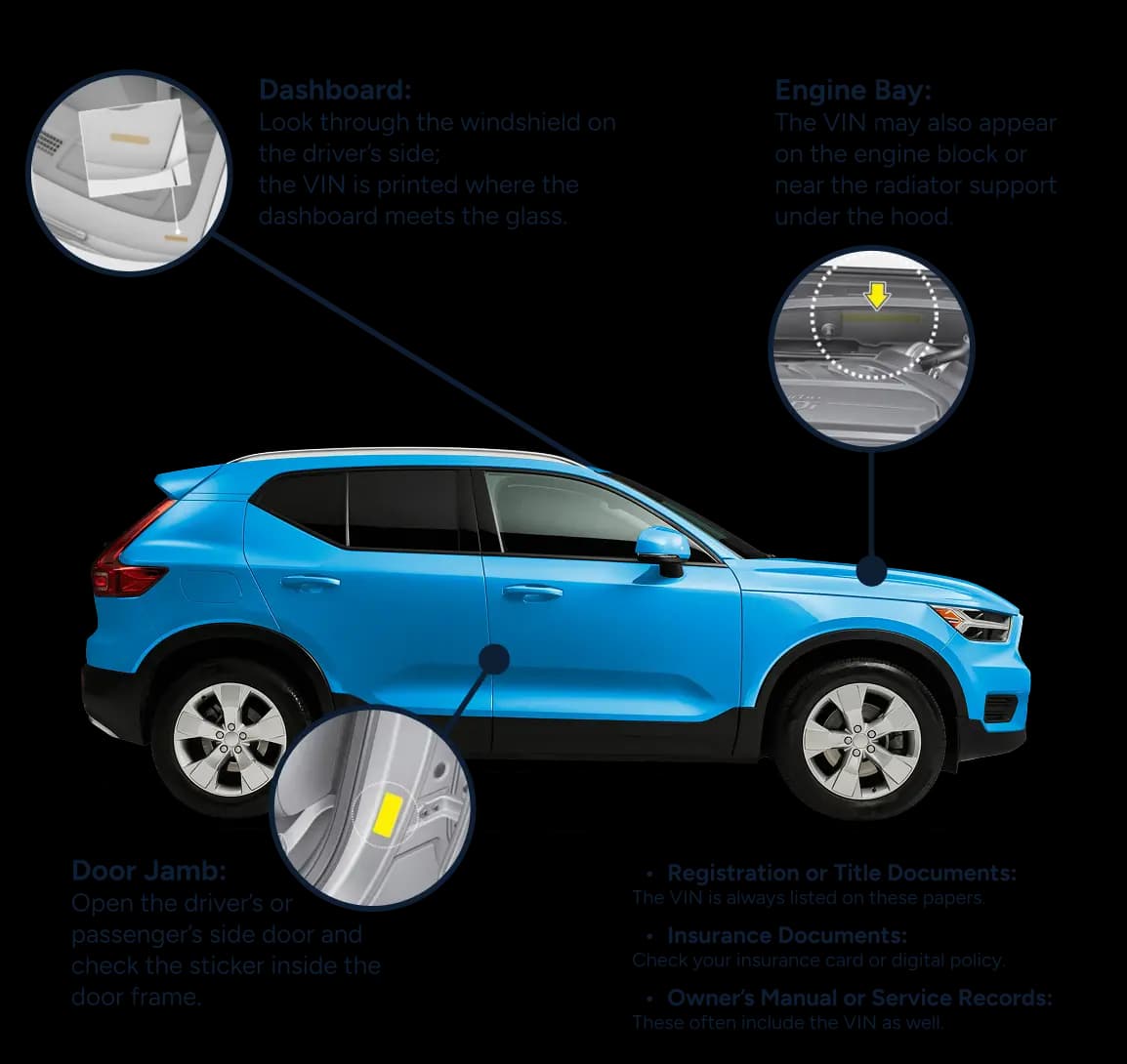
Where to Find the VIN
The VIN is permanently attached to the vehicle in several locations and is also recorded on official paperwork. Checking multiple sources helps confirm that the number is accurate and untampered.
Dashboard
Stand outside the car and look through the windshield on the driver’s side. The VIN is commonly visible near the base of the dashboard, displayed on a small metal plate or printed label.
Door Jamb
Open the driver’s door and check the sticker located on the door frame or B-pillar. This label usually shows the VIN alongside manufacturer details such as axle loads, tyre sizes, and compliance information.
Under the Hood
Open the bonnet and inspect areas like the firewall between the engine bay and cabin, or the engine block itself. Many manufacturers permanently stamp the VIN in these locations for identification purposes.
Vehicle Documentation
The VIN also appears on official documents, including the Belgian registration certificate, insurance paperwork, and ownership records. Always ensure the VIN on the vehicle matches the one listed in these documents to avoid registration or legal issues.
What Information Can You Get in a Vehicle History Report by VIN?
Running a VIN check in Belgium gives access to a detailed vehicle history report that outlines both historical records and current vehicle data. This information supports smarter decisions by offering clarity on a car’s background, specifications, and legal standing.
Detailed Vehicle Specification
This section outlines the vehicle’s core factory details, such as where it was built, its original list price, fuel type, drivetrain layout, and other key identifiers that define the model.
Detailed Build Information
Factory build data includes engine size, transmission configuration, and original equipment installed during production. These details help confirm whether the vehicle matches the description provided by the seller.
Check the Price
Original pricing and current market value estimates allow buyers to evaluate whether the asking price aligns with the vehicle’s specifications, age, and condition within the Belgian market.
Technical Specifications
Technical data explains how the vehicle is engineered to perform in everyday driving, offering insight into its mechanical setup and operational characteristics.
Engine Details
Engine information covers displacement, layout, power output, and expected fuel efficiency based on manufacturer specifications, helping assess performance and running costs.
Transmission Type
This section confirms whether the vehicle uses a manual or automatic gearbox, including gear count and drivetrain configuration, which can influence driving experience and maintenance needs.
Title and Vehicle Condition
Legal and condition-related records help identify potential risks that could affect ownership or registration in Belgium, reducing the chance of unexpected complications.
Title Status
The report shows whether the vehicle has a clear title or carries classifications such as salvage, rebuilt, or other branded statuses that may limit use or resale.
Odometer Records
Mileage entries from inspections and official registrations are compared to highlight inconsistencies or warning signs of possible odometer tampering.
Lien and Loan Information
Financial records indicate whether the vehicle is tied to debts or obligations that could delay or prevent a lawful transfer of ownership.
Outstanding Loans
Any active financing agreements or unpaid vehicle loans still linked to the car are flagged to help avoid legal or financial disputes after purchase.
Legal Claims
Information on legal holds, claims, or court-related restrictions is included to identify issues that may affect registration or ownership rights.
Sales and Ownership History
Ownership records show how the vehicle has changed hands over time, helping identify patterns that may signal higher risk.
Previous Owners
This section lists the number of past owners and outlines how long each ownership period lasted, offering context on how the vehicle was used.
Price History
Historical sale prices provide insight into value trends, making it easier to judge whether the current price is reasonable.
Accident Records
Auction data shows whether the vehicle has been sold through dealer or wholesale auctions, which can indicate trade-ins, fleet use, or rapid resales.
Auction Dates and Locations
Dates and locations of auction listings help trace when and where the vehicle was sold, adding context to its sales history.
Auction Condition Photos
Images taken at the time of auction provide visual evidence of the vehicle’s condition during previous sales, helping identify damage or wear that may no longer be disclosed.
How to Decode the VIN in Belgium
To decode the VIN and get a vehicle history report in Belgium is easy; you just need to follow these steps:
Step 1: Enter the VIN
Enter the VIN of the vehicle you want to check on the form above. If you do not have the VIN, you may ask the seller directly.
Step 2: Click "Search VIN"
After you’ve written down the VIN, click on the button to submit the form.
Step 3: Get the Report
Wait for seconds, get the report generated, then examine the preview page. After it's done, you can proceed to payment to get the full vehicle history report.
Free vs. Paid VIN Check in Belgium
With our free VIN check in Belgium, you can get the basic yet important information about the vehicle. If you want to get more information about the vehicle, you can use a paid VIN check. Here are the picture-to-picture differences between the two services:
Information / Records | Free VIN Check | Paid VIN Check |
|---|---|---|
Year, make & model | ||
Engine type & size | ||
Transmission | ||
Drive type | ||
Fuel type | ||
Doors | ||
Horsepower & torque | ||
Detailed vehicle specs | ||
Technical specs | ||
Auction records | ||
Vehicle sales history | ||
Title and condition | ||
Accident records | ||
Theft records | ||
Lien and loan records |
The Importance of Checking the VIN Number in Belgium?
Checking a VIN in Belgium is a smart step before committing to a vehicle purchase or sale. It helps verify the car’s background using recorded data, reducing uncertainty and lowering the risk of unexpected issues after the transaction.
Buyers
For buyers in Belgium, a vehicle history report offers insights that go far beyond what can be spotted during a short test drive or basic inspection.
Identify Hidden Damage
A VIN check can expose records of previous accidents, structural damage, or major repairs that may not be obvious from the vehicle’s exterior or interior condition.
Verify Odometer Accuracy
Mileage inconsistencies still appear in the used car market. Reviewing historical mileage entries helps confirm whether the odometer reading aligns with the vehicle’s documented usage.
Sellers
Sellers in Belgium can also benefit from reviewing a VIN report before listing a car for sale, especially when dealing with informed or cautious buyers.
Close Deals Faster
Providing a verified vehicle history report answers common buyer concerns upfront, helping reduce back-and-forth questions and speeding up negotiations.
Set a Fair Price
Access to accurate information on condition, ownership history, and market value allows sellers to price the vehicle realistically while staying competitive.
Why Choose Our Belgium VIN Check Tool
Our Belgium VIN check tool is built to deliver quick and dependable access to detailed vehicle data relevant to the Belgian market. Whether reviewing a car in Brussels, Antwerp, or elsewhere, the service helps uncover important records before a decision is made.
Complete Vehicle Reports
Each report includes key history details such as accident records, ownership changes, and title-related information. Data is gathered from reliable sources connected to Belgian and European vehicle databases.
User-Friendly System
Simply enter the VIN into the search field above. The platform is designed for easy navigation, making it suitable for first-time buyers and experienced automotive professionals across Belgium.
Trusted and Update Data Source
Access vehicle information compiled from trusted sources, including vehicle registration authorities, auction platforms, insurance-related records, manufacturer databases, and other automotive data providers.
Fast Results
A full vehicle history report is generated in around 30 seconds, allowing users to review essential details and technical data without unnecessary delays.
Affordable Pricing
Our Belgium VIN check delivers strong value by offering more in-depth information than many basic alternatives, without unnecessary cost.
100% Private and Secure
Every VIN lookup is processed securely. Personal information and search activity remain confidential and will not be shared with a third party.
Tips Before Buying a Used Car in Belgium
Buying a second-hand car in Belgium comes with a few country-specific rules. You will need to pay attention to the important documentation to check before you proceed to purchase the vehicle.
Check Mandatory Documents
Make sure the seller provides the Car-Pass, a valid technical inspection for sale (keuring voor verkoop), the registration certificate (both parts), and the Certificate of Conformity before proceeding.
Confirm the “Keuring voor Verkoop”
Before sale, the vehicle must pass a specific technical inspection for used cars. This check confirms roadworthiness and is mandatory, even if the car recently passed a regular inspection.
Check Low Emission Zone Eligibility
Review the car’s Euro emissions standard to ensure it complies with Low Emission Zone rules in cities such as Brussels, Antwerp, and Ghent, where access restrictions may apply.
Do a Test Drive
Before you finalise the process, be sure to do a short test drive to ensure the vehicle has no weird feeling when it is driven.
The Stolen Car Bargain - James’ Car Buying Story
James Mitchell was a budget-conscious buyer looking for a reliable used car. He found a 2017 Vauxhall Astra K that was listed for £6,500 and described as having only minor cosmetic damage. A simple VIN check gave him an eye-opener.
A VIN Check Discovered:
- Stolen and recovered (May 2020)
- Multiple auction appearances
- Original retail value: £11,379
- Unknown structural damage from theft
Asking Price
£6,500
Fair Value
£3,500–£4,500
The Takeaway
James walked away. A stolen/recovered vehicle carries unknown structural and mechanical damage from the theft itself. He found a genuinely clean Astra instead and paid fairly, without the theft history baggage.
Avoid buying stolen cars with a simple Belgium VIN lookup today.
Run VIN Checks in Other Countries
No matter where a car is from, our VIN check works across Europe to help you verify imported vehicles.
Get a VIN Check Before Buying a Used Car in Belgium
Check the VIN and review the car report in Belgium to ensure the car is in good condition and has no hidden defects.
FAQs on Belgium VIN Check
Can you check the Toyota VIN in Belgium?
Yes. In Belgium, a Toyota’s VIN can be checked through both official and private channels to confirm its history, registration status, and technical data. Options include the Belgian SPF Mobility platform and paid services such as Vehicle Report EU.
How to read a Belgian number plate?
Belgian licence plates, introduced in November 2010, use red characters on a white background with a blue EU strip. Formats like 1-AAA-111 or 2-AAA-111 are common. The plate follows the owner, not the vehicle, and does not indicate a geographic region.
Do cars in other countries have VIN numbers?
Yes. Almost every country assigns a VIN to each vehicle. While the US and Canada strictly regulate the 17-character format under NHTSA rules, most other countries follow ISO standards, which also use a similar 17-character structure to uniquely identify vehicles.