
Albania VIN Chec by VIN: Check a Vehicle
Before you sell or purchase a used car, it is best to check its odometer reading–especially if the car is imported. Use the Albania VIN check and get a vehicle history report to examine the car’s odometer reading, country of origin, age, market value, and much more.
Why Checking the VIN in Albania is Crucial?
100,000
In 2025, ~100,000 vehicles were imported, up slightly from 2024.
1000+
According to INSTAT road safety data for 2023, Albania recorded 1,285 road traffic accidents
9 years
As of 2024, about 53 % of newly registered vehicles were 9–15 years old, and 26 % were over 15 years old.
What is a VIN Number?
A Vehicle Identification Number (VIN) is a unique 17-character code assigned to every vehicle at the time of production. In Albania, checking the VIN is especially important because the used car market is heavily dependent on imports, particularly from Germany, Italy, Switzerland, and other EU countries
Many vehicles enter Albania after years of use abroad, which is why it is essential to verify their background. Use the Albania VIN check to confirm the vehicle’s origin, review ownership history, and identify whether it has been involved in accidents, declared a total loss, or reported stolen in another country.
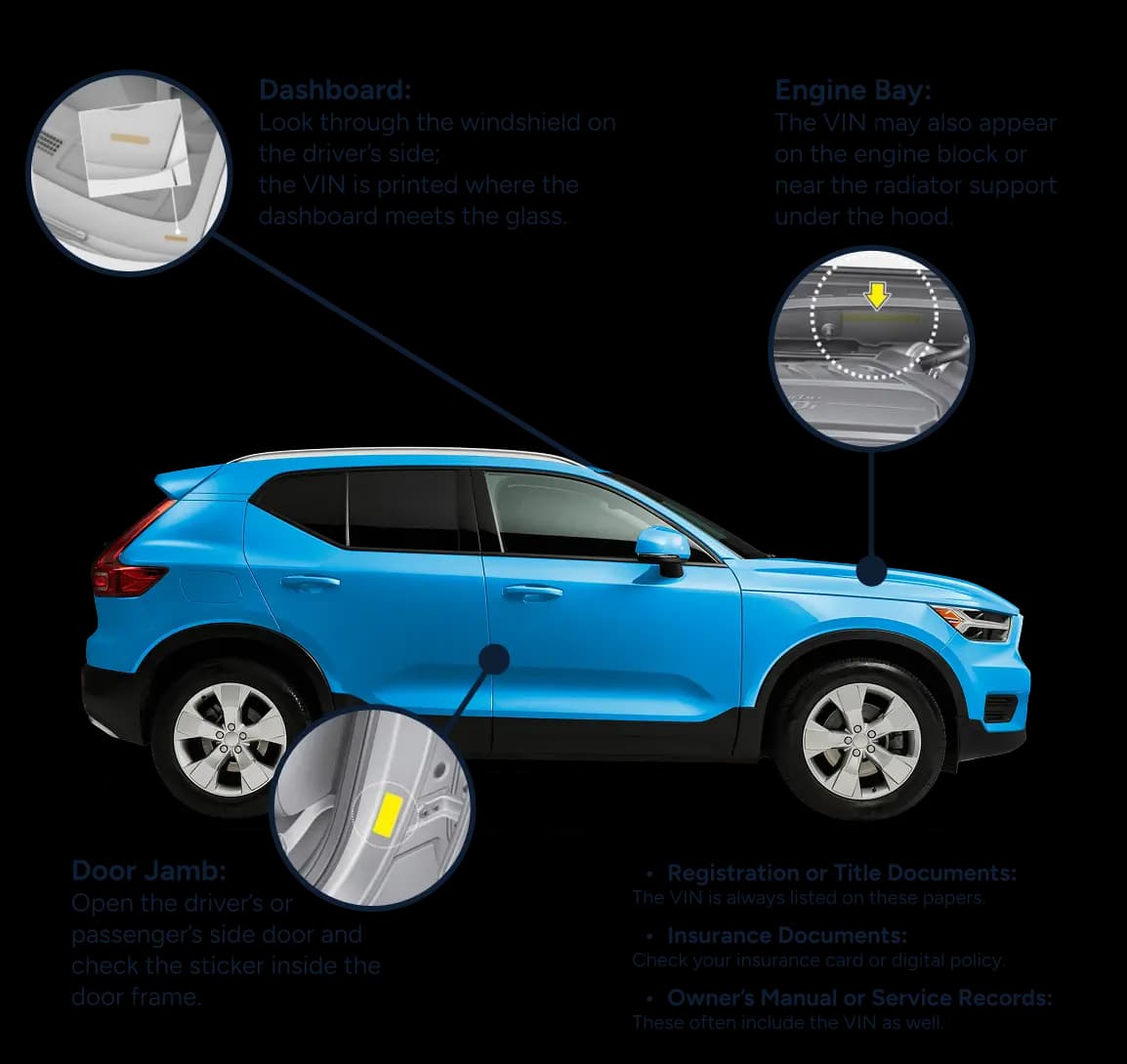
Where to Find the VIN on a Car?
The VIN is permanently attached to the vehicle and also recorded on official documents. To ensure accuracy and avoid fraud, it’s important to compare the numbers in multiple locations.
Dashboard
Look at the lower corner of the driver’s side dashboard where it meets the windshield. The VIN is usually visible from outside the car on a metal plate or fixed label.
Door Jamb
Open the driver’s door and inspect the door frame near the latch area. A manufacturer sticker placed here typically displays the VIN along with additional production information.
Under the Hood
Lift the hood and check the firewall (the metal panel between the engine bay and the cabin) or the engine block itself. Many vehicles have the VIN stamped or securely attached in these areas.
Vehicle Documentation
The VIN also appears on official paperwork, including registration certificates, insurance documents, and import papers. Before completing a purchase in Albania, always make sure the VIN on the vehicle matches every document exactly.
What Information Can You Get From an Albania VIN Check?
Running a VIN number check in Albania gives you access to a detailed vehicle history report that reveals far more than what you see during a physical inspection. Since Albania’s used car market relies heavily on imports, especially from Germany, Italy, and Switzerland, a VIN report helps check the vehicle’s authenticity and information.
Vehicle Overview
Understand how the car was originally built and configured at the factory. With a vehicle report, you can examine the vehicle’s specifications and market value.
Factory Build Details
Access production information such as country of manufacture, engine type, fuel system, drivetrain, trim level, and transmission setup to confirm the vehicle matches the seller’s description.
Value and Pricing Insights
Compare the original MSRP with current market estimates to determine whether the asking price reflects the car’s real condition and demand in Albania.
Mechanical and Technical Data
Review core specifications that affect performance, reliability, and maintenance costs.
Engine Information
Check engine size, configuration, horsepower output, and manufacturer-rated efficiency figures.
Transmission and Drive System
Confirm whether the vehicle has a manual or automatic gearbox, including gear count and whether it operates as front-wheel, rear-wheel, or all-wheel drive.
Legal Status and Mileage History
Avoid registration issues and hidden usage problems by reviewing official records.
Registration and Title Status
See whether the vehicle carries a clean title or has been marked as salvage, rebuilt, or previously written off abroad before being imported to Albania.
Odometer Records
Examine the recorded mileage history to identify irregularities or possible odometer rollback.
Lien Information
Ensure there are no legal or financial obstacles tied to the vehicle.
Outstanding Loans
Check whether the car is still subject to unpaid financing agreements that could complicate ownership transfer.
Legal Claims or Liens
Identify registered claims, court actions, or other financial holds that may prevent a smooth transaction.
Accident and Damage History
Learn about past incidents that may affect safety or resale value.
Reported Collisions
Access insurance or official reports documenting accidents involving the vehicle.
Damage Severity Assessment
Understand how serious previous damage was and whether proper repairs were recorded.
Ownership and Market Activity
Track how the vehicle has moved through the market over time.
Previous Owners
See how many times ownership has changed and identify patterns such as frequent resales.
Historical Sale Prices
Review previous selling prices to evaluate whether the current listing aligns with market trends in Albania.
Auction Records
Determine whether the vehicle has previously been sold through auction channels abroad.
Auction Listings
Find out when and where the vehicle appeared at dealer or wholesale auctions.
Auction Photos
View available images from past auction listings to assess the vehicle’s earlier condition.
How to Decode VIN Number in Albania?
To decode the VIN number and get a vehicle history report in Albania, you can use our service to get it done. Follow these simple steps:
Step 1: Enter the VIN
Once you have the VIN, you can enter it into the form.
Step 2: Click "Search VIN"
After you’ve written down the VIN, you can just click on the button to submit.
Step 3: Get a Detailed Vehicle History Report
Wait for a few seconds to get the report generated. Then, proceed to payment and download the vehicle history report.
Free vs. Paid VIN Check in Albania
Our free VIN number check in Albania helps you to get detailed information about the vehicle’s specifications. If you need to get the complete information on the vehicle’s records, use our paid VIN check.
Information / Records | Free VIN Check | Paid VIN Check |
|---|---|---|
Year, make & model | ||
Engine type & size | ||
Transmission | ||
Drive type | ||
Fuel type | ||
Doors | ||
Horsepower & torque | ||
Detailed vehicle specs | ||
Technical specs | ||
Auction records | ||
Vehicle sales history | ||
Title and condition | ||
Accident records | ||
Theft records | ||
Lien and loan records |
Why You Should Check the VIN in Albania
In Albania’s used car market, most vehicles are imported from Western Europe, with many risks if you do not check the history carefully. That is why checking the VIN is crucial in Albania for both buyers and sellers.
Buyers
If you’re purchasing a used vehicle in Albania, a VIN report gives you clarity beyond what you see during a test drive.
Detect Previous Damage
Many vehicles on the Albanian market are imported after accidents or insurance write-offs abroad. A VIN report can reveal past collision records, structural damage, or insurance claims that may not be obvious during inspection.
Verify Real Mileage
Odometer tampering remains a known issue in the regional used car market. Checking the VIN allows you to compare recorded mileage data and identify inconsistencies that could indicate rollback.
Sellers
For sellers, having a reliable vehicle history report helps you to ensure the vehicle is in the right condition with no hidden defects.
Build Buyer Confidence
When you can present documented history, buyers feel more secure. Transparency reduces negotiation friction and helps move the sale forward faster.
Price the Vehicle Accurately
The vehicle history report helps you understand the car’s background, past sales data, and market value. With this information, you can set a fair and competitive price based on the vehicle’s condition and market value.
Why Choose Our Albania VIN Check Tool
Our Albania VIN number check service is designed to provide detailed vehicle insights quickly and securely.
Comprehensive Reports
Access key data, including accident history, ownership changes, title records, and import background sourced from reliable databases connected to European vehicle records.
Easy to Use
Simply enter the VIN number into the search field. The process is straightforward and suitable for both experienced car buyers and first-time users.
Trusted Data Sources
Our system gathers information from verified automotive and registration databases to ensure accuracy and reliability.
Fast Process
Get the vehicle history report in less than a minute, say no to the long waiting process.
Competitive Pricing
We offer detailed reports at a cost-effective rate, giving you access to more data without overpaying.
Secure and Confidential
All VIN searches are private. Your data is protected and never shared with third parties.
Tips to Avoid Used Car Scams in Albania
In Abania, the most commonly used car scam is odometer tampering in order to make the car seem less used. In addition, many sellers sell used cars with hidden damage that is not disclosed to buyers. To avoid such things, here are some tips before you purchase a used vehicle in Albania.
Independent Mechanical Inspection
Before committing to any purchase, have the vehicle inspected by a trusted, independent mechanic. This is especially important in Albania, where many cars are imported and may have hidden accident damage or underlying engine problems not visible during a basic inspection.
Check for Rust and Corrosion
Carefully examine the undercarriage, wheel arches, door hinges, and lower body panels for rust. Vehicles imported from countries like Germany or Italy may show corrosion due to road salt exposure, which can lead to costly structural repairs.
Verify All Documentation
Make sure the seller provides complete and valid documentation, including registration papers and proof of ownership. To avoid legal issues, finalize the ownership transfer through a licensed notary to ensure the transaction is properly recorded.
Confirm the Technical Inspection (Kontrolli Teknik)
In Albania, vehicles must pass a mandatory technical inspection at regular intervals. Verify that the car has a valid inspection certificate. If it does not, consider the additional time, cost, and potential repair expenses before completing the purchase.
Run VIN Checks in Other Countries
No matter where a car is from, our VIN check works across Europe to help you verify imported vehicles.
FAQs About Albania VIN Check
How to read a European VIN?
Decoding a European Vehicle Identification Number (VIN) means understanding its 17-character structure (older models may occasionally vary). The VIN is divided into sections: the first three characters (WMI) identify the country and manufacturer, characters 4–8 (VDS) describe the vehicle’s model and features, and the final section (VIS) shows the production year and unique serial number.
Do cars in Europe have VIN numbers?
Yes, all vehicles registered in Europe are required to have a VIN. This 17-character alphanumeric code is permanently stamped on the chassis and displayed on an official identification plate. It complies with EU regulations and serves as a standardized way to track a vehicle’s manufacturer details, technical specifications, and history.
Do different countries have different VIN numbers?
Yes, VIN formats and coding can vary by country. While most modern vehicles follow the 17-character ISO 3779 standard, the first three characters, known as the World Manufacturer Identifier (WMI), differ depending on country or region of production.
Can I buy a European car and bring it to the US?
Yes, importing a European car into the United States is possible, but it is usually practical only if the vehicle is at least 25 years old. Cars older than 25 years are exempt from many EPA and DOT requirements, while newer vehicles often require costly modifications to meet U.S. safety and emissions standards, and in some cases, they may not qualify for import at all.