
Volkswagen VIN Decoder - Check Vehicle Details For Free
Take advantage of the Free Volkswagen VIN Decoder tool to validate car specifications. Generate a comprehensive vehicle history report that includes detailed information about mileage, damages, and other recorded data pertaining to the car.
Auction Records
Title & Condition
Vehicles Sales History
Title Records
Accident Records
What is a Volkswagen VIN Number?
The Volkswagen VIN Number (Vehicle Identification Number) is a unique 17-digit code assigned to each Volkswagen vehicle. It serves as a digital fingerprint, containing vital information about the vehicle’s manufacturing origin, specifications, and history.
Founded in 1937, the VW VIN is a gateway to understanding the vehicle’s identity and background. By conducting a Volkswagen VIN lookup, individuals can decode the VIN and gain access to details such as the vehicle’s model, engine type, trim level, production year, manufacturing plant, ownership history, accident records, service history, and more. This powerful tool fosters transparency and empowers individuals to make well-informed decisions when purchasing or researching a Volkswagen vehicle.
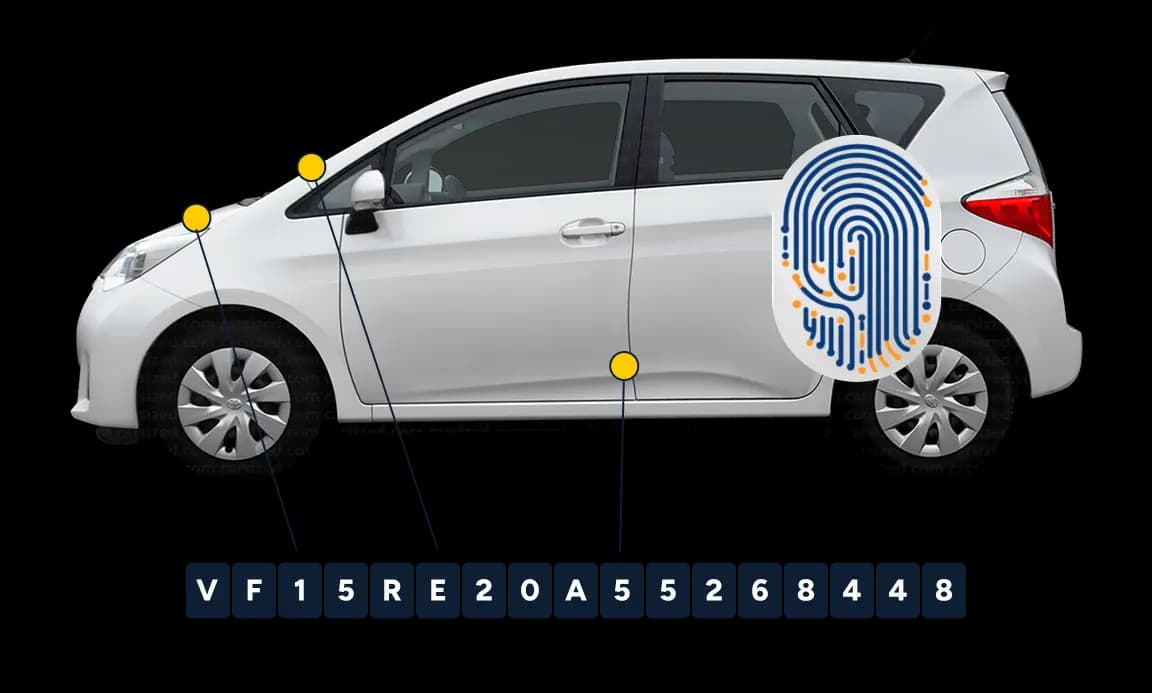
How to Read Volkswagen VIN Number?
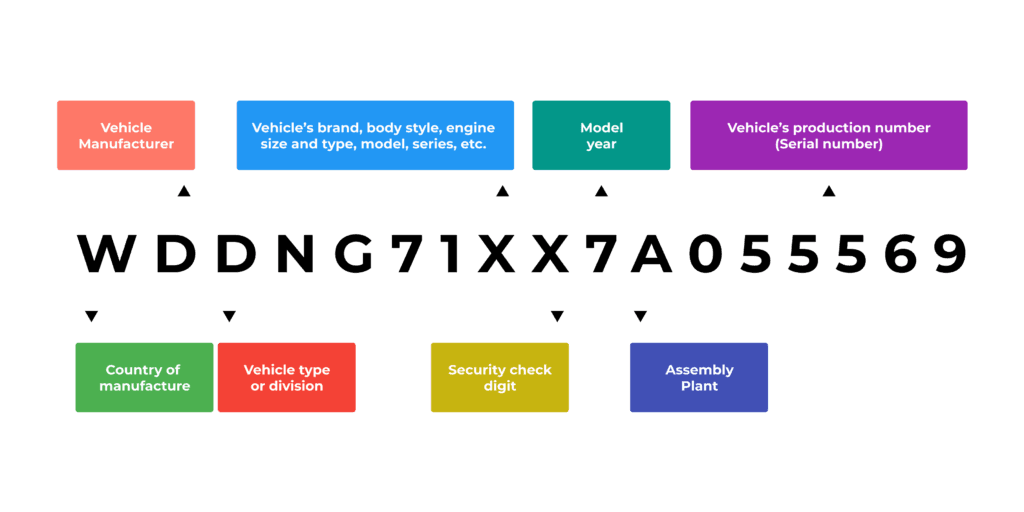
The Vehicle Identification Number (VIN) for Volkswagen vehicles contains a wealth of information about the specific car. The VIN is a unique code composed of 17 alphanumeric characters and is assigned to each vehicle by the manufacturer. When decoding a Volkswagen VIN, several important details can be determined.
The first three characters indicate the world manufacturer identifier, which identifies the country and manufacturer. The following five characters provide information about the vehicle’s model, body style, and engine type.
The ninth character is a check digit that verifies the accuracy of the VIN. Characters 10 to 17 represent the vehicle’s unique serial number, providing individual identification.
Additionally, the VIN can reveal information about the vehicle’s production year, assembly plant, and optional equipment or trim levels. Overall, the VW VIN Number is a valuable tool for understanding the specifics of a vehicle’s manufacturing and features.
Country of Origin
The first character represents the country where the Volvo vehicle was manufactured.
Manufacturer Identifier
The second character identifies the Volvo manufacturer.
Vehicle Type
The third character indicates the Volvo vehicle type. For example, “F” represents a passenger car.
Vehicle Attributes
Characters 4–8 provide specific details about the Volvo vehicle’s model, body style, engine type, and other attributes.
Check Digit
The ninth character is a mathematical calculation used to verify the accuracy of the Volvo VIN.
Model Year
The tenth character represents the model year of the Volvo vehicle, usually a letter or number.
Assembly Plant
The eleventh character indicates the specific assembly plant where the Volvo vehicle was manufactured.
Production Sequence
The twelfth to seventeenth characters represent the Volvo vehicle’s production sequence number, which is a unique identifier for each vehicle.
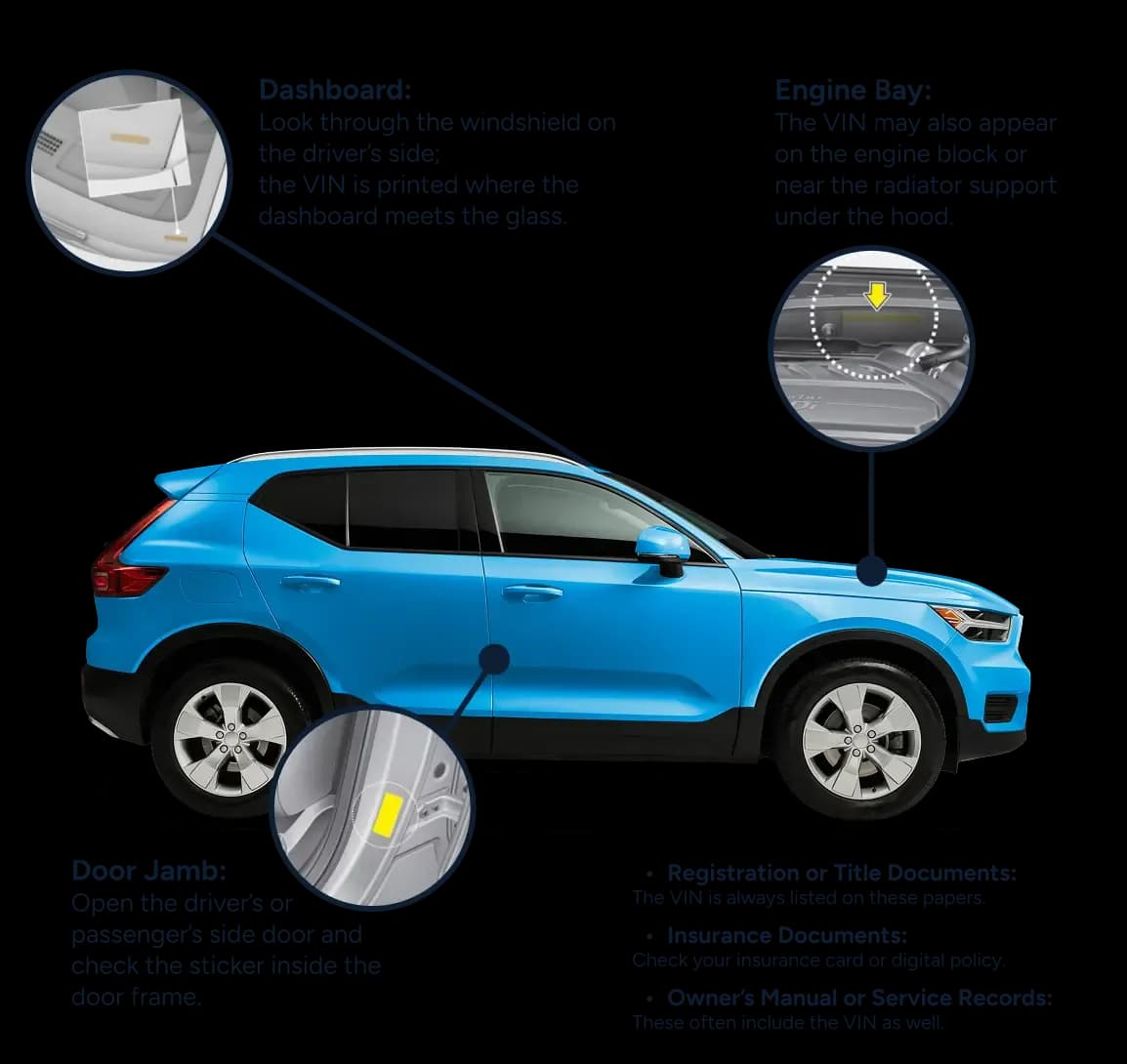
Where to find the Volkswagen VIN?
Driver’s Side Dashboard
Check the top of the dashboard on the driver’s side by looking through the windshield from outside the vehicle.
Driver’s Side Door Jamb
Open the driver’s door and look along the door frame or pillar for a sticker or metal plate showing the VIN.
Under the Hood
Look inside the engine compartment, usually near the front of the engine bay, firewall, or radiator support.
Vehicle Frame (Older Models)
On older vehicles, the VIN may be engraved directly onto the vehicle’s frame or chassis.
Vehicle Documents
If you can’t find the VIN on the car, it’s also listed on official documents like the title, registration, or insurance papers.
List of Models: What works with our Volkswagen VIN Search Tool Europe?
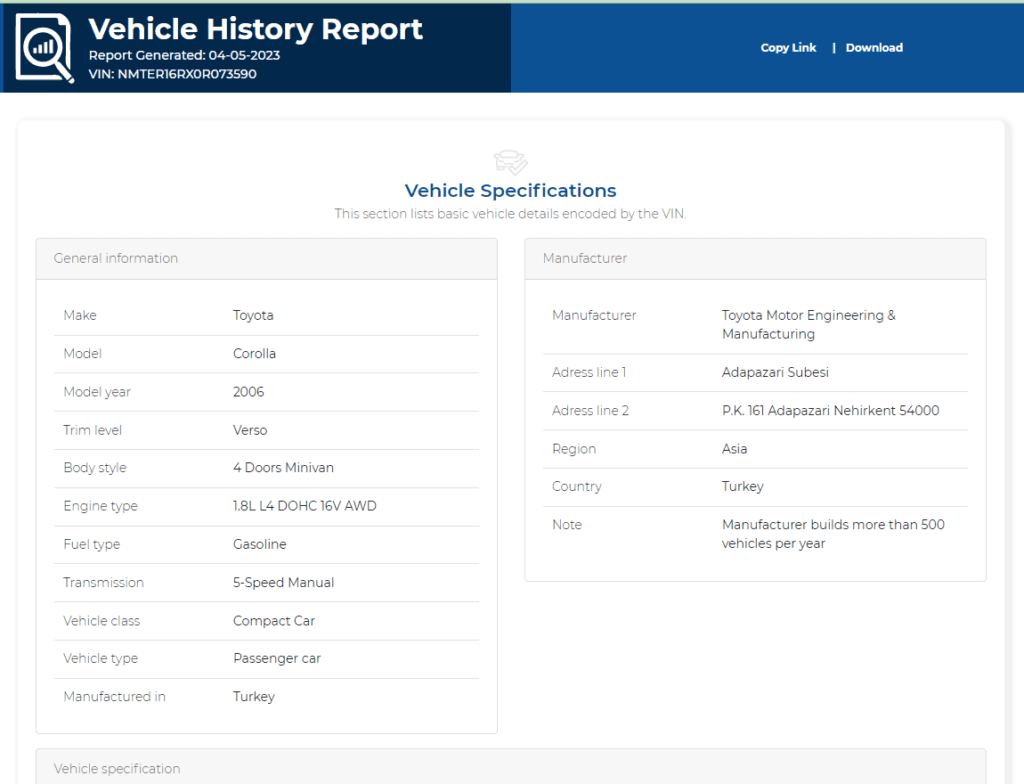
Sample Report
2006 Toyota Corolla Verso
VIN: NMTER16RX0R073590
Body Style: 4 Doors Minivan
Engine: 1.8L L4 DOHC AWD
Country of Assembly: Turkey
How to Decode a Volkswagen VIN Number?
Step 1: Find Your Volkswagen VIN
Locate the 17-digit VIN on your vehicle, usually on the dashboard, door jamb, or official documents.
Step 2: Enter the VIN Into the Decoder
Paste the VIN into our VIN Decoder tool to start the decoding process.
Step 3: Decode Vehicle Details
The tool automatically breaks down the VIN to reveal model, engine, year, and manufacturing information.
Step 4: Review the Results
Check the decoded details to verify your Volkswagen’s specifications quickly and accurately.
VW History Check: What you'll learn with the Volkswagen VIN?
Performing a Volkswagen history check using the Vehicle Identification Number (VIN) can provide valuable insights into a vehicle’s background. By conducting a VIN check, you can access various details about Volkswagen’s history. Some of the key information you can learn includes:
Vehicle Specifications
The VIN can provide detailed information about the vehicle’s specifications, including the engine type, transmission, trim level, and optional equipment installed, allowing you to ensure that the advertised features match the actual vehicle.
Ownership History
The VIN can reveal the number of previous owners the vehicle has had, helping you assess its usage and potential wear and tear.
Title Information
The VIN can disclose the title status of the vehicle, including whether it has a clean title, salvage title, or has been reported as stolen or rebuilt.
Recall Information
The VIN can help you identify any open recalls on the vehicle, ensuring that any necessary repairs or replacements have been completed to address safety or performance issues.
Mileage Verification
The VIN check can verify the accuracy of the reported mileage on the vehicle, giving you confidence in the odometer reading and helping you detect any potential odometer tampering.
FAQs About Volkswagen VIN Lookup
What is a Volkswagen VIN decoder?
A Volkswagen VIN decoder is a tool or software that can interpret the Vehicle Identification Number (VIN) of a Volkswagen vehicle and provide detailed information about its manufacturing, specifications, and history.
How can I use a Volkswagen VIN decoder?
Using a Volkswagen VIN decoder is typically straightforward. You input the 17-character VIN of the Volkswagen vehicle into the decoder, and it will analyze the code to extract information about the vehicle’s model, production year, assembly plant, engine type, trim level, optional equipment, and more.
How accurate are Volkswagen VIN decoders?
Volkswagen VIN lookup rely on official databases and records to provide accurate information. However, the accuracy ultimately depends on the quality and reliability of the decoder used. It’s recommended to use trusted and reputable sources for accurate results.