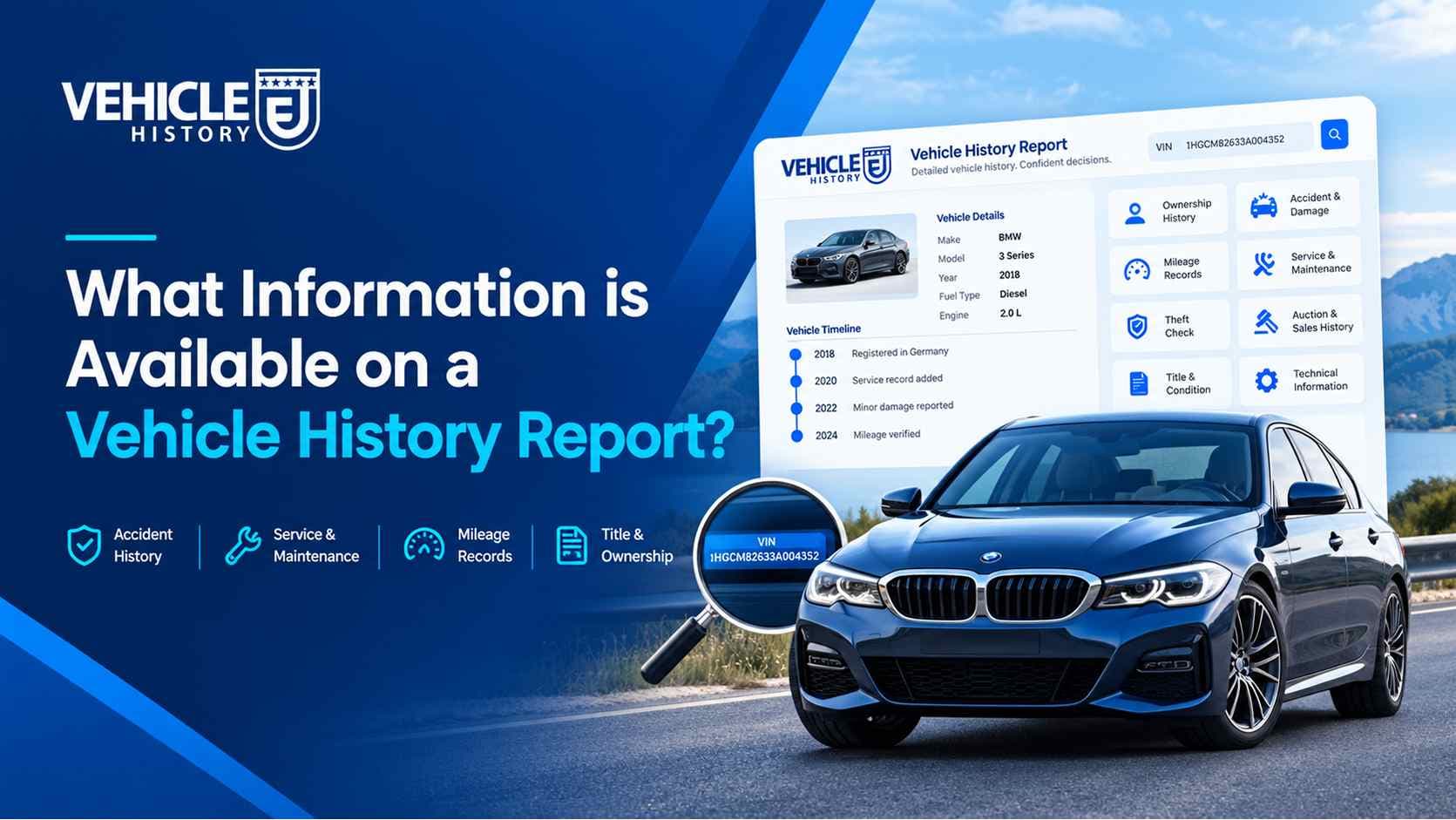
A vehicle history report uses the vehicle identification number (VIN) to collect records connected to a car’s past. Later, these records are collected and shown in one document that can be used by sellers, buyers, and everyone who wants to run a quick check on a vehicle’s background.
Knowing what information is available on a vehicle history report helps you understand which records matter most, identify possible warning signs, and make a more informed decision when buying a used vehicle.
Key Takeaways
- A vehicle history report can show important records about a car’s identity, ownership, accidents, mileage, lien, theft, servicing, registration, and previous sales.
- Mileage, ownership, accident, and finance records can help buyers spot potential red flags before purchasing a used vehicle.
- A VIN decoder and vehicle history report serve different purposes: a decoder focuses on factory specifications, while a history report focuses on recorded events from the vehicle’s past.
- A vehicle history report is not a substitute for a physical inspection or a test drive
What is Included in a Vehicle History Report?
A vehicle history report gathers available information from multiple sources and organizes it into a record of the vehicle’s past. The information included can vary depending on the country, vehicle age, manufacturer data availability, and the databases connected to the report provider.
Before reviewing a vehicle’s history, the first step is confirming that the report matches the correct vehicle. This is where vehicle identification and specification information becomes important.
READ ALSO: European Car Check Tools: 7 Essential Resources for Every European Car Owner
Vehicle Identification and Specification Information
Every vehicle history report begins by identifying the vehicle through its unique Vehicle Identification Number (VIN). This information creates the foundation for connecting historical records, specifications, and ownership data to the correct vehicle.
VIN, Make, Model, and Production Details
A vehicle history report may include important identification details such as:
- VIN number
- Vehicle manufacturer
- Model name
- Production year
- Body style
- Engine type
- Fuel type
- Transmission
- Drive type
Ownership History
Ownership history is one of the most valuable sections of a vehicle history report because it provides insight into how a vehicle has been used over time. Reviewing previous keepers and registration events can help buyers understand whether the vehicle has had stable ownership or frequent changes that may require further investigation.
Number of Previous Owners
A vehicle history report may show details about previous ownership events, including:
- Number of registered owners
- Ownership changes
Accident and Damage History
Accident and damage records are among the most important details to review before buying a used vehicle. A vehicle history report may reveal previous incidents that affected the vehicle’s condition, safety, or market value.
Reported Accidents and Damage Records
Depending on available data sources, a vehicle history report may include information about:
- Accident dates
- Reported damage events
- Damage severity
- Insurance records
- Collision information
Salvage, Write-Off, and Damaged Vehicle Records
Some vehicle history reports include records related to vehicles that have been declared damaged, written off, or rebuilt after major incidents.
What is included in this Section?
On the sections, you can examine the following information:
- Total loss records
- Insurance write-offs
- Salvage vehicle history
- Rebuilt vehicle records
- Write-off classifications in the UK such as Category S and Category N
Mileage and Odometer History
Checking the mileage history records is an important part of evaluating a used vehicle because odometer readings can highly affect a vehicle’s value, maintenance needs, and expected lifespan.
Recorded Mileage Readings
A vehicle history report may collect mileage records from sources such as:
- Vehicle inspections
- Service and maintenance records
- Registration databases
- Auction records
Mileage and Odometer History
Mileage history is a key part of evaluating a used vehicle because the odometer reading affects its value, maintenance needs, and expected lifespan. A vehicle history report can help buyers review recorded mileage information and identify possible inconsistencies.
Recorded Mileage Readings
A vehicle history report may collect mileage records from several sources, depending on the country and available databases. These can include:
- Service and maintenance records
- Registration databases
- Auction records
Service and Maintenance Records
Service and maintenance history can provide useful insight into how a vehicle was cared for throughout its ownership. Regular servicing can indicate that important maintenance was carried out, while gaps in the available records may warrant closer attention.
Previous Repairs and Maintenance Events
On the vehicle report, you’ll get information on available repairs and maintenance history, such as its service dates, where it gets serviced, what kind of components were repaired, and maintenance milestones.
READ ALSO: How to Find the Complete Service History of Your Car
Recalls and Safety Campaigns
Not only showing the vehicle’s maintenance history, but you can also get information on the vehicle’s recall records. Not knowing the recall components or status is a dangerous situation, as you might accidentally purchase a recalled car but not been fixed yet.
Recall Information
Examine the recall details such as the date, causes of the recall, fixes, and the final recall status, whether it is still open or closed.
Lien, Loans, and Ownership Restrictions
Lien records can be particularly important when buying a used vehicle because outstanding agreements may affect the transfer of ownership. Depending on the country and available data sources, a vehicle history report may reveal financial information connected to the vehicle.
Outstanding Lien Records
On the report, you can see if the vehicle has this information:
- Active finance agreements
- Leasing arrangements
- Outstanding vehicle loans
- Other recorded financial agreements
Liens and Legal Restrictions
Some vehicle history reports may also identify registered claims or restrictions associated with a vehicle. These can include:
- Registered liens or claims
- Ownership restrictions
- Other recorded financial obligations
The type of information available varies between countries and data providers. If a report shows an outstanding claim or restriction, buyers should verify its current status with the relevant party before purchasing the vehicle.
Theft and Security Records
A theft check can help to check whether a vehicle has been reported as stolen or involved in a theft-related event. This is particularly important when buying a used vehicle from an unfamiliar seller or purchasing an imported vehicle with a history in another country.
Stolen Vehicle Records
Depending on available records, a vehicle history report may include:
- Police theft records
- Reported theft dates or events
- Vehicle recovery information
READ ALSO: How to Find the Complete Service History of Your Car
Auction and Sales History
Previous auction and sales records can provide additional context about a vehicle’s history, particularly when the vehicle has been sold through a salvage or wholesale auction. These records can sometimes show information that is no longer visible on the current vehicle or seller’s listing.
Previous Auction Listings
The vehicle history report includes this information:
- Previous auction appearances
- Auction or sale dates
- Vehicle condition descriptions
- Recorded damage or condition notes
Historical Vehicle Photos
On our vehicle history report, you can get up to ten pictures of the vehicle when it was auctioned–you can use this information to examine if it has damage that can be dangerous for the vehicle.
READ ALSO: What to Know Before Buying a Car That Was in an Accident
What Information May Not Appear on a Vehicle History Report?
A vehicle history report can provide valuable information about a used car’s past, but it should not be treated as a complete record of everything that has happened to the vehicle.
Some details may not appear on the vehicle history records, including:
- Repairs completed without being reported to a database
- Private maintenance or servicing
- Mechanical problems that were never recorded
- Minor or cosmetic damage
- The vehicle’s current mechanical or physical condition
For this reason, a vehicle history report works best as one part of the used-car buying process, especially when running a quick background check. Buyers should compare the report with the vehicle documentation and the current condition, then arrange a physical inspection and a test drive.
READ ALSO: Find Out About the Danger of VIN Cloning
How to Get a Vehicle History Report?
To get a vehicle history report, follow these steps and get it done in less than a minute.
Step 1: Find the VIN
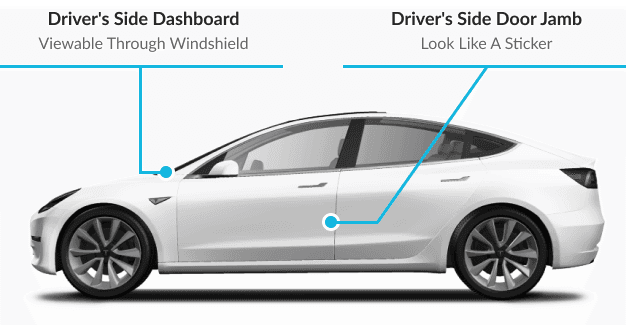
Check the driver’s side door jamb, windshield, or the vehicle’s paperwork, like insurance or maintenance records.
Step 2: Enter the VIN
Enter the VIN into the form. Then, click the button to submit the form.
Step 3: Get the Report
Examine the preview page to confirm vehicle specs like the year, make, and model, then proceed to payment to get the full vehicle history report.
How to Read a Vehicle History Report Before Buying a Used Car
Knowing the components available in a vehicle history report is only the initial step. Before buying a used car, review the information systematically and compare it with the seller’s claims, vehicle documents, and the car’s current condition.
Verify the Vehicle Identity
Start by confirming that the report belongs to the vehicle you are considering. Check that the VIN matches the vehicle and that the make, model, production details, and specifications are consistent with the seller’s advertisement.
Review Red Flags in the Timeline
Next, review the vehicle’s history from the earliest available record to the most recent. Pay attention to sudden mileage changes, frequent ownership transfers, accident or damage records, outstanding finance, and other events that require further investigation.
Compare Report Information With the Vehicle Condition
Finally, compare the report with the vehicle itself. A history report should be reviewed alongside the seller’s documentation, a physical inspection, and a test drive to identify issues that may not appear in historical records.
READ ALSO: How to Check Equipment by VIN Number
How to Read a Vehicle History Report Before Buying a Used Car
Knowing the components available in a vehicle history report is only the initial step. Before buying a used car, review the information systematically and compare it with the seller’s claims, vehicle documents, and the car’s current condition.
Verify the Vehicle Identity
Start by confirming that the report belongs to the vehicle you are considering. Check that the VIN matches the vehicle and that the make, model, production details, and specifications are consistent with the seller’s advertisement.
Review Red Flags in the Timeline
Next, review the vehicle’s history from the earliest available record to the most recent. Pay attention to sudden mileage changes, frequent ownership transfers, accident or damage records, outstanding finance, and other events that require further investigation.
Compare Report Information With the Vehicle Condition
Finally, compare the report with the vehicle itself. A history report should be reviewed alongside the seller’s documentation, a physical inspection, and a test drive to identify issues that may not appear in historical records.
READ ALSO: How to Check Equipment by VIN Number
Vehicle History Report vs. VIN Decoder: What is the Difference?
A VIN Decoder and a vehicle history report use the vehicle’s VIN to run the process; however, they provide different information on the vehicle. A VIN decoder primarily identifies the vehicle specifications, while a vehicle history report focuses on records from the vehicle’s past.
Here is the difference between the two tools, so you can find out which one suits you best!
| VIN Decoder | Vehicle History Report |
|---|---|
| Shows vehicle specifications | Shows available historical records |
| Engine, trim, transmission, and other vehicle details | Accidents, ownership, mileage, title, and other recorded events |
| Confirms vehicle identity and configuration | Helps show what happened to the vehicle over time |
Know the Past of a Vehicle Before You Buy
A vehicle history report shows more than just vehicle details. The report shows ownership records, accident records, mileage readings, lien information, theft records, service history, auction history, and maintenance records, which help provide useful context before buying a used car. However, no report contains every event in a vehicle’s life.
Use the history to identify potential red flags, then compare it with the seller’s documentation and the vehicle’s current condition. In addition to the vehicle history report, you should get a quick physical inspection and test drive to help confirm what the report shows and see issues that historical records may not be captured on the report.
FAQs on What’s in a Vehicle History Report
What information does a vehicle history report show?
A vehicle history report provides a record of a car’s past using its Vehicle Identification Number (VIN), which may include accident records, ownership events, registration details, and other reported history.
Can a vehicle history report show previous accidents?
Yes, a vehicle history report can show previous accidents when those incidents have been recorded by available data sources. However, privately repaired or unreported accidents may not appear.
Does a vehicle history report show previous owners?
Yes, a vehicle history report may show previous ownership events or the number of registered owners, depending on the country and the data available for the vehicle.
Is a vehicle history report enough before buying a used car?
No, a vehicle history report should not be the only step before buying a used car. It provides valuable historical records, but a physical inspection, test drive, and checking other supporting documents are needed to reveal issues that may not appear in the report.