How to Check a Car’s CO₂ Emissions
 Adewale PeterPublished inVerificación del VIN
Key Takeaways
- Car CO₂ emissions are commonly expressed in grams per kilometre (g/km).
- Fuel consumption for petrol and diesel cars is commonly shown in L/100 km, with lower figures indicating lower fuel use.
- WLTP and NEDC use different testing procedures, so their figures should not be treated as directly interchangeable.
- Always match CO₂ and fuel-consumption figures to the vehicle's engine, fuel type, version, and model year.
When checking a used car in Europe, knowing the CO₂ emissions and the fuel consumption is important. These things can help you understand how much fuel a vehicle uses and how much carbon dioxide it produces under standardized testing conditions. These figures can also be relevant when comparing vehicles, checking running costs, or reviewing vehicle specifications.
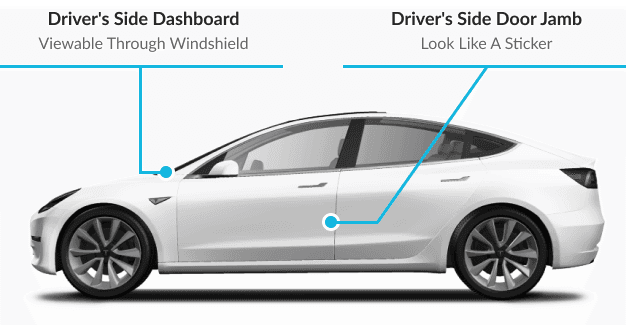
Depending on the vehicle and country, you can find this information in registration documents, manufacturer specifications, vehicle labels, technical information, or by using an online information service. This article will guide you through finding CO₂ emissions quickly by using the vehicle’s VIN to get the window sticker.
What Are Car CO₂ Emissions?
Car CO₂ emissions refer to the amount of carbon dioxide associated with a vehicle's fuel use. For passenger cars, the figure is commonly presented in grams per kilometre (g/km).
A vehicle with a lower published CO₂ figure produces less CO₂ per kilometre under the applicable test conditions. However, the figure should be viewed alongside other specifications because emissions can vary depending on the engine, fuel type, vehicle configuration, and testing procedure.
What Does CO₂ g/km Mean?
The CO₂ g/km figure tells you how many grams of carbon dioxide a vehicle produces for each kilometre covered during the standardized test. For example, a car rated at 120 g/km has a published CO₂ figure of 120 grams per kilometre under the conditions of the applicable test procedure.
This measurement provides a more consistent way to compare the CO2 emissions per km between vehicles. When checking a specific CO2 value for a car, look at the test standard and vehicle configuration as well as the number itself.
Why Do Cars Have Different CO₂ Emissions?
You need to note that every vehicle has different levels of emissions due to several factors that affect how much fuel they use. Engine designs, fuel type, vehicle weight, aerodynamics, transmission, and overall efficiency can influence the car CO2 emissions.
In general, a vehicle that consumes more fuel over a given distance will also tend to produce more CO₂. However, the published figure depends on the specific vehicle and its tested configuration, so two cars in the same class can have noticeably different results.
Petrol vs. Diesel CO₂ Emissions
Petrol and diesel vehicles can have different published CO₂ figures because the fuels have different chemical compositions and engines can use them differently. Diesel engines have historically been associated with lower CO₂ emissions per kilometre than comparable petrol engines because they can use less fuel for the same distance.
Hybrid and Electric Vehicles
Hybrid vehicles combine an internal combustion engine with an electric motor, so their published CO₂ figures can be lower than those of comparable conventional vehicles. Plug-in hybrids can have particularly low test-cycle CO₂ figures because the standardized test takes their electric driving capability into account.
How Are Car CO₂ Emissions Measured?
Car CO₂ emissions and fuel consumption are measured using standardized laboratory testing procedures. These tests provide a way to publish figures for different vehicles; however, the testing method can also affect the result.
What is WLTP and NEDC?
For vehicles sold in Europe, WLTP is the newer procedure to measure a car’s emissions, while NEDC is the new method to measure emissions. Knowing which test produced a vehicle's figures can help you understand why published CO₂ emissions or fuel-consumption numbers may differ between vehicles or model years.
WLTP
WLTP, or Worldwide Harmonised Light Vehicles Test Procedure, is a testing procedure used to determine standardized fuel-consumption and CO₂ figures for modern passenger cars and light commercial vehicles.
NEDC
NEDC, or New European Driving Cycle, was the earlier standardized procedure used to measure vehicle fuel consumption and CO₂ emissions in Europe. It was developed before modern driving conditions and vehicle technology changed significantly.
Because NEDC used different testing conditions from WLTP, a NEDC figure should not be treated as directly equivalent to a WLTP figure.
| Feature | WLTP | NEDC |
|---|---|---|
| Full name | Worldwide Harmonised Light Vehicles Test Procedure | New European Driving Cycle |
| Role | Modern standardized testing procedure | Older European testing procedure |
| Used for | Modern vehicle specifications | Mainly older vehicle specifications |
| CO₂ measurement | Yes | Yes |
| Fuel-consumption measurement | Yes | Yes |
| Directly comparable? | Not directly comparable with NEDC | Not directly comparable with WLTP |
Where Can You Find a Car’s CO₂ Emissions?
There are several places where you can find a car’s CO₂ emissions and fuel-consumption information in Europe. However, it depends on the country, vehicle, and model year. These figures may appear in registration documents, manufacturer specifications, vehicle labels, or a window sticker.
When checking a specific car, make sure the information relates to the correct model, engine, fuel type, and vehicle configuration. The way CO₂ and fuel-consumption figures are presented can also vary between countries and documents.
Vehicle Registration Documents
Vehicle registration documents can contain technical information about a car, including its CO₂ emissions or related environmental data. If you are checking a used car, compare the CO₂ figure in the registration documents with other available vehicle specifications where possible. This can help you confirm that the information relates to the correct vehicle rather than a similar model or engine variant.
Manufacturer Information
Car manufacturers publish technical information specific to their models; this also includes fuel consumption and CO₂ emissions. Manufacturer specifications are particularly useful when you know the exact model, engine, transmission, fuel type, and model year. Different versions of the same model can have different CO₂ and fuel-consumption figures, so it is important to check the specification for the correct configuration.
Vehicle Labels
The CO₂ and fuel-consumption information is also displayed on vehicle labels designed to provide consumers with information about a car's environmental and fuel-efficiency characteristics.
Online Vehicle Information
Online vehicle databases and specifications tools have been developed to research a car's CO₂ emissions, fuel consumption, and technical specifications. These services can be useful when you need information for a specific vehicle or want to compare different configurations by using a window sticker.
How to Check a Used Car’s CO₂ Emissions
When you're checking a used car, start by identifying the exact vehicle before checking CO₂ emissions. The same model can have different emissions figures depending on its engine, fuel type, transmission, body style, and equipment.
Once you have the correct vehicle configuration, check the applicable CO₂ figure in its registration documents, manufacturer specifications, or an online vehicle-information service. Also check whether the figure was measured under WLTP or NEDC conditions.
Identify the Exact Vehicle
You can start by confirming the car’s make, model, model year, engine, fuel type, transmission, and variant or trim. These are the important details that help you find the correct specifications for a used car; a VIN can be helpful to retrieve available information.
Why the Engine and Variant Matter
A single car model can be offered with several engines, fuel types, transmissions, body styles, and trim levels. Each configuration can have different fuel-consumption and CO₂ figures. For example, two versions of the same model may use different engines or transmissions and therefore have different published emissions. Optional equipment and vehicle weight can also affect the tested figures.
Check the Applicable CO₂ Figure
After confirming the vehicle configuration, check its published CO₂ emissions figure in g/km. Modern vehicles will generally have WLTP figures, while older vehicles may have NEDC data. If both figures are available, make sure you understand which one applies to the vehicle and documentation you are reviewing.
Compare CO₂ With Fuel Consumption
CO₂ emissions and fuel consumption are closely related, but they measure different things. CO₂ emissions are generally expressed in g/km, while fuel consumption for petrol and diesel vehicles is commonly shown in L/100 km.
How to Find a Car’s Fuel Consumption
Fuel consumption shows how much fuel a vehicle uses to travel a given distance. In Europe, petrol and diesel vehicles commonly use litres per 100 kilometres (L/100 km) to express this figure.
You can usually find a car's fuel consumption in its registration documents, manufacturer specifications, vehicle labels, or online vehicle-information resources. When comparing used cars, check that the figure relates to the same engine, fuel type, variant, and testing procedure.
What Does L/100 km Mean?
L/100 km means the number of litres of fuel a vehicle uses to travel 100 kilometres under the stated test conditions. For example, a vehicle rated at 5.5 L/100 km has a published fuel-consumption figure of 5.5 litres per 100 kilometres.
Lower vs. Higher L/100 km Figures
A lower L/100 km figure means less fuel is used to cover the same distance under the stated test conditions. For example, a car rated at 5 L/100 km uses less fuel per 100 kilometres than one rated at 7 L/100 km.
Fuel Consumption vs. Fuel Economy
In Europe, fuel consumption is commonly shown as L/100 km, where a lower number indicates lower fuel use. In the UK, you may still encounter miles per gallon (MPG). Because L/100 km and MPG use different approaches, check the measurement unit before comparing figures.
Why Real-World Fuel Consumption Can Differ
Factors such as driving style, traffic, weather, road conditions, vehicle load, tyre pressure, speed, and use of heating or air conditioning can affect fuel consumption. Frequent short trips or heavy urban traffic can also result in higher fuel use than the published figure.
Can a Window Sticker Show CO₂ Emissions?
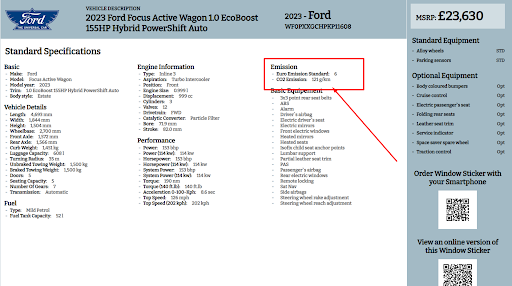
A window sticker is an important document that is included with the vehicle, and it includes CO₂, engine, equipment, and specification data. For used cars, this can make it easier to review the vehicle's configuration and compare the available information with other sources.
Vehicle History EU's Window Sticker uses manufacturer data to provide details for the specific vehicle when the relevant data is available. The information shown can vary depending on the vehicle, model year, market, and data availability.
What Information Can Be Included?
The window sticker does not only cover fuel economy and emission information. This is the information you can find on the window sticker
- CO₂ emissions
- Engine information
- Fuel type
- Vehicle specifications
- Standard equipment
- Optional equipment
- MSRP
Check Car Emission
Checking a car's CO₂ emissions and fuel consumption starts with identifying the exact vehicle and its applicable specifications. Registration documents, manufacturer data, technical specifications, and online vehicle-information services can all provide useful figures.
Always check whether the figures use WLTP or NEDC and remember that laboratory results may differ from real-world driving. A window sticker also shows CO₂, fuel economy, equipment, engine, and specification information together based on manufacturer data and decoded VIN information.
FAQs on CO₂ Emissions and Fuel Consumption
How can I check a car's CO₂ emissions?
You can check a specific car's CO₂ emissions in g/km by using its registration number with an online vehicle checker, or by checking the vehicle's registration documents or logbook.
What is a good CO₂ emissions figure for a car?
There is no single CO₂ emissions figure that is considered good for every vehicle. Emissions vary by vehicle type, engine, fuel type, and testing procedure. Fully electric vehicles produce no tailpipe CO₂ emissions, although their overall emissions depend on how the electricity is generated.
How are car CO₂ emissions measured in Europe?
Car CO₂ emissions in Europe are measured using standardized laboratory testing procedures, such as WLTP, rather than being based on random on-road driving.
What does CO₂ emissions g/km mean?
CO₂ emissions in g/km means the amount of carbon dioxide associated with each kilometre travelled under the stated test conditions. The figure is used to compare the emissions performance of different vehicles.
Where can I find a car's fuel consumption?
You can find a car's fuel consumption in its trip computer, manufacturer specifications, vehicle documents, or available window sticker information. The figures may vary depending on the vehicle configuration and testing procedure.
About Adewale Peter
41 articles published
Peter, un escritor versátil especializado en contenido automotriz, ha destacado como periodista de marca para Vehicle History EU. Con más de 8 años de experiencia, se ha distinguido en la creación de contenido atractivo y centrado en el lector, incluyendo el formato de libros para Amazon Kindle y la creación de elegantes presentaciones de PowerPoint. Le apasiona investigar y escribir blogs y artículos inspiradores e informativos, esforzándose siempre por mejorar y dar lo mejor de sí.