Key Takeaways
- Use the VIN to check available stolen-vehicle and history records.
- Compare the VIN across the vehicle, title, registration, and other documents.
- Inspect VIN plates and labels for signs of alteration or mismatched information.
- A clean stolen-vehicle search does not guarantee that a vehicle has never been stolen.
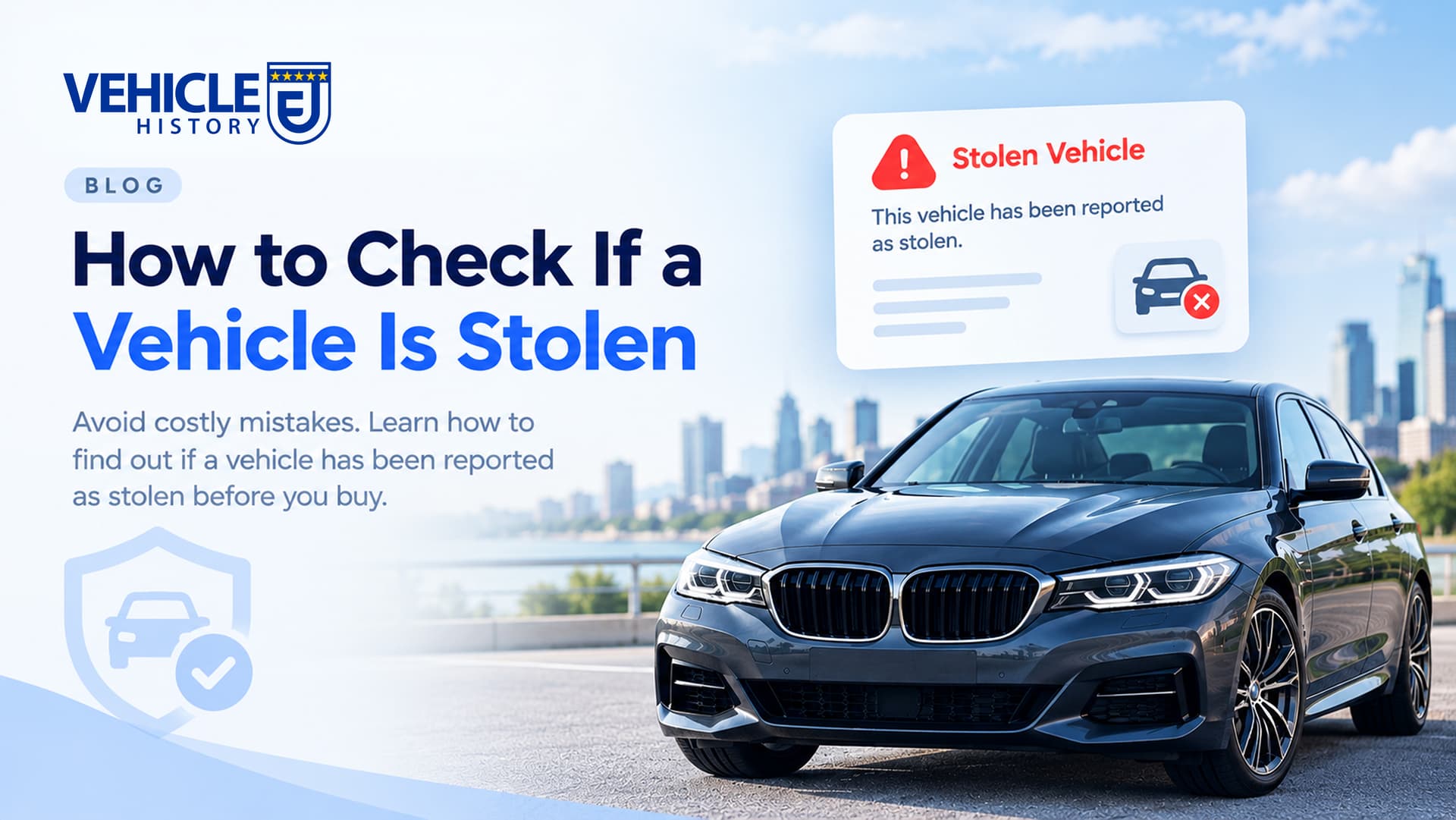
To check if a vehicle is stolen, start with its VIN and search stolen records by getting a vehicle history report. However, a VIN check should not be your only check, as you will need to examine the whole vehicle and its documents and look for signs of VIN tampering or other inconsistencies.
This is important when buying a used vehicle from a private seller, where you may have fewer records to review. This guide will guide you through the easiest way to check a vehicle’s stolen records by using the VIN and retrieve the vehicle history report in seconds.
What You Need to Check If a Vehicle is Stolen
Before you check if the vehicle has ever been reported stolen, you will need to collect the necessary information correctly. The important detail is the VIN, which you can use to get a vehicle history report and examine whether the vehicle you plan to purchase has ever been stolen.
If you are buying from a private seller, keep the seller's vehicle details and listing information for comparison. Whenever possible, get the VIN directly from the vehicle and compare it with the paperwork before you use an online VIN check tool.
Where to Find the VIN
A VIN is placed in different spots on the vehicle and its paperwork. We recommend that you check more than one location so you can compare the digits and ensure they are a match.
On the Vehicle
Check these locations to find the VIN:
- Lower driver's side dashboard: The VIN is typically visible through the windshield.
- Driver's side door jamb: Check the label or plate around the driver's side door frame.
Paperworks
You can also find the VIN on:
- Vehicle registration
- Title
- Insurance documents
How to Check If a Vehicle is Stolen
Checking for a stolen vehicle in Europe is easy; you can use the vehicle’s VIN and enter it into an online VIN check tool like Vehicle History EU to retrieve a vehicle history report that helps identify theft-related events or inconsistencies, while checking the VIN on the vehicle and its paperwork helps confirm that the records belong to the car you are inspecting.
Check the Vehicle's History Report
A vehicle history report shows detailed information about the vehicle’s records, including whether the vehicle has ever been stolen. Aside from showing the vehicle's stolen records, you can also examine the vehicle’s records.
Look for Related History Records
Pay more attention to the vehicle’s title, auction, damage, and registration records that do not match the seller’s description or the vehicle’s current condition. Although the records do not automatically indicate theft, inconsistencies can be a reason to investigate the vehicle's history further.
Compare the VIN on the Vehicle and Documents
You may compare the VIN you can find on the vehicle with the one displayed on the dashboard, driver’s side door jamb, title registration, and insurance. Remember, the VIN should match exactly across these sources to make sure it has not been tampered with.
Check for VIN Mismatches
A VIN mismatch can result from an administrative or paperwork error. However, it does not erase the fact that it may indicate that the VIN might be tampered with. Ask the seller for an explanation and verify the VIN before you pay for anything and get the unit.
Check the Vehicle for Signs of VIN Tampering
A physical inspection is important because an online search only checks the VIN you enter. If a VIN plate or label has been altered or replaced, the process could return records for a different vehicle. Do not rely on an online VIN check; run an offline vehicle inspection to examine the actual condition.
Inspect the VIN Plate and Labels
Look closely at the VIN plate or label for signs that may have been altered. Check for missing or damaged plates, scratches around the VIN, loose or poorly fitted labels, altered characters, unusual fonts or spacing, or signs that a label has been replaced.
Look for Signs of Alteration
If you find any damage, such as inconsistent formatting or evidence of a VIN plate that has been disturbed, it can warrant further investigation. However, no single sign automatically proves that a vehicle is stolen. Ask the seller for an explanation and consider having the vehicle inspected by a professional.
Compare Multiple VIN Locations
The VIN should be consistent across different locations where it appears on the vehicle. Compare the number visible through the windshield with the VIN on the driver's side door-jamb label and the vehicle's documents.
Check the Dashboard and Door-Jamb VIN
Ensure the VIN on the dashboard and the one placed on the door jamb match exactly. If the VINs are different, do not proceed with the transaction.
Check the VIN Against the Vehicle
The VIN should match the vehicle you are inspecting, including the make, model, year, body type, engine, origin, and more.
Look for Vehicle Details That Do Not Match
If the vehicle’s physical details do not match the information when the VIN is decoded, you will need to investigate the details further. The discrepancy could indicate incorrect records, a VIN issue, or another problem with the vehicle's identity.
Watch for Signs That a Vehicle May Be Stolen
Certain warning signs can indicate that a vehicle needs additional verification before you buy it. None of these signs alone proves that a vehicle is stolen, but several issues together should prompt closer checks.
An Unusually Low Asking Price
A price significantly below similar vehicles can warrant additional checks, especially when combined with VIN or documentation inconsistencies. Compare the asking price with similar vehicles in the same market to identify whether there is an unusual difference.
Pressure to Complete the Sale Quickly
Be cautious if a seller discourages you from running a VIN check, reviewing documents, or having the vehicle inspected before payment. Pressure to skip these checks can prevent you from identifying problems with the vehicle's history or documentation.
Inconsistent Vehicle History
You will need to compare the seller’s description with the listing, paperwork, or vehicle history records. If you find any differences in its ownership records, mileage, damage, title, or other details, investigate it further.
Missing or Incomplete Documentation
If a vehicle’s documentation is missing, it doesn’t automatically mean that the vehicle is stolen, but it can make ownership and vehicle identity harder to verify. Ask the seller to provide the relevant documents and explain any missing or inconsistent information before completing the purchase.
What to Do If a Vehicle is Reported Stolen
If a VIN check returns stolen-vehicle records, stop the transaction. Save the results and other relevant information, then you can contact the appropriate law-enforcement agency for guidance. If you already purchased the vehicle, keep all records and notify your insurer.
Before Buying the Vehicle
Save the vehicle listing, seller communication, VIN, and the report. Contact the appropriate law enforcement agency and provide the information you have so they can advise you on what you need to do next.
Do Not Confront the Seller
Do not confront the seller, attempt to recover the vehicle, or take action that could put you at risk. Let law enforcement handle any investigation or contact with the seller.
If You Already Bought the Vehicle
If you bought the vehicle and knew it was stolen later on, preserve payment records, seller messages, listing screenshots, VIN information, and title or registration documents. Contact law enforcement to report the situation and explain how you acquired the vehicle.
Keep Your Purchase Records
Don’t forget to keep all the documentation related to the transaction in one place. These records help to establish when and how you purchased the vehicle and provide evidence of the transaction if its ownership is later questioned.
What Happens If You Buy a Stolen Vehicle?
When you accidentally purchase a stolen vehicle, you will have unnecessary problems such as difficulty insuring it or changing ownership status. The outcome depends on the circumstances and the laws in the jurisdiction where the vehicle is located.
The Vehicle May Be Recovered
If law enforcement identifies the vehicle as stolen, they may recover the vehicle as part of an investigation. Then, the buyer has a chance to lose possession while authorities determine the vehicle’s ownership and circumstances. A purchase receipt or bill of sale does not necessarily establish legal ownership if the vehicle was stolen from its rightful owner.
You May Have Difficulty Recovering Your Money
If you paid for a stolen vehicle, recovering the money from the seller may be difficult. You can keep your payment record, seller communications, listing screenshots, and vehicle documents as evidence of how and when you purchased the vehicle. Specific ownership, recovery, and compensation rules vary by jurisdiction.
Conclusion on How to Check a Vehicle for Stolen Records
When checking whether a vehicle is stolen, you will need to start with the Vehicle Identification Number; however, a single search is not enough. Compare the VIN across the vehicle and its documents, review available vehicle-history records, and inspect the VIN for signs of tampering or inconsistencies. If a search returns a stolen-vehicle record, stop the transaction and contact the appropriate authorities; do not handle the issues all by yourself.
FAQs on How to Check a Stolen Vehicle
How do I check if a vehicle is stolen?
To check if a vehicle is stolen, enter its 17-character Vehicle Identification Number (VIN) into a vehicle-history or stolen-vehicle check service such as Vehicle History EU.
Can I check if a vehicle is stolen using the VIN?
Yes. You can check whether a vehicle has been reported stolen by searching its 17-character VIN against available stolen-vehicle records.
Can a vehicle have a clean VIN check and still be stolen?
Yes. A vehicle can have a clean VIN check and still be stolen. A clean result only means that the VIN was not flagged in the databases searched. Database coverage varies, so not every theft record may be available.
What should I do if a VIN comes back as stolen?
Do not complete the transaction or send any additional money. Save the search results and relevant vehicle information, then report the match to the appropriate law-enforcement agency.
What if the VIN on the vehicle does not match the documents?
A VIN mismatch means the number shown on the vehicle does not match the VIN on its title, registration, or other documents. It can result from a simple paperwork error, but it can also indicate a more serious issue with the vehicle's identity.